

How Luxury Brands and TikTok Could Save the Royal Opera House
When ballet dancers wore Burberry-designed costumes at a performance earlier this year, it was a clue to Lloyd
2023-10-19 13:21

How to unblock and watch BBC iPlayer from anywhere in the world
BBC iPlayer is one of the most popular streaming sites in the UK. Users get
2023-07-18 17:47

BigCommerce Scores 24/24 Total Medals in 2023 Paradigm B2B Combine Midmarket and Enterprise Editions
AUSTIN, Texas--(BUSINESS WIRE)--Jul 20, 2023--
2023-07-20 20:27
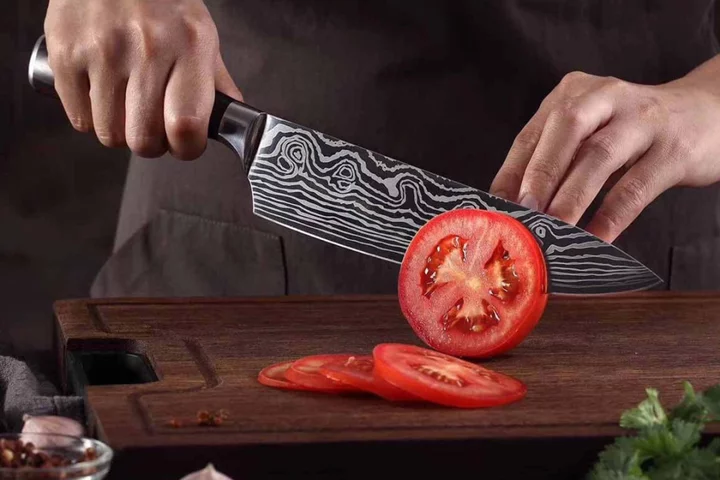
Razor-sharp savings: This 5-piece knife set is just $90
TL;DR: As of October 5, get the Konig Kitchen Damascus 5-Piece Knife Set & Gift
2023-10-05 17:25

Flight Disruptions Linger Ahead of Busy Holiday
US airlines continued to grapple with flight disruptions heading into the busy weekend ahead of Independence Day, keeping
2023-06-30 21:27

Whisky lifts spirits of inflation-hit investors
The smell of ageing whisky, known as the angel's share, wafts across from 9,000 oak barrels stored from floor to ceiling in two vast...
2023-05-31 10:46

The best Android tablets for every task
Are you all about Google Android OS or Apple iOS? You’re likely one or the
2023-09-28 18:48

Terminally ill mum wants ‘happy memories’ with family after hand numbness turned out to be deadly disease
A mum who was told she likely suffered from carpal tunnel syndrome after feeling numbness in her right hand during her pregnancy has been given just a few years to live after scans revealed she will soon be paralysed. Charlotte Parker, 28, from West Berkshire, was diagnosed with amyotrophic lateral sclerosis (ALS) nine months after giving birth and is now trying to create “happy memories” with her young family while there is still time. The rare condition, a type of motor neurone disease (MND), means Charlotte only has two to five years’ life expectancy during which time she will become increasingly paralysed. Charlotte, who lives in Thatcham with her fiance George, 32, a mechanic, and their three children, says she wants her 11-month-old son Jimmy to know she was there. Her friends and family are fundraising so she can afford to take her family to Disneyland in Paris and take advantage of what time they have left together. “I don’t think you can imagine having to tell your parents at 28 that you have been diagnosed with a terminal illness,” Charlotte, who works as a revenue and debt accountant at an energy company, told PA Real Life. “At the moment my life is so fast paced that I don’t really have much time to slow down and think about what’s happening. “Most people think MND-ALS affects older people but it actually affects a wide range of people. It can happen to anyone.” Charlotte was seven months’ pregnant when she began feeling a strange “numbness and weakness” in her right hand. “I was struggling to open jars and bottles,” she said. “Gradually it just got worse and worse and by the time I gave birth to Jimmy, I was considerably weaker. “Doing day-to-day tasks while trying to learn how to look after a newborn baby was definitely a challenge.” After flagging the numbness to her midwife, Charlotte was told she likely suffered from carpal tunnel syndrome, a common health condition caused by pressure on a nerve in the wrist. But Charlotte was referred to a neurologist when she went for a routine checkup six weeks after Jimmy was born. “He sent me for an MRI in January for possible inflammation in the brain,” she said. “I think subconsciously at the time that’s when I knew it was something a bit more serious.” While Charlotte was worried, her results came back and suggested there was no problem with her brain or spinal cord. Instead of getting better, however, the numbness started to spread to her other hand. “I kept calling because it started going into my left hand as well,” she said. “I am still able to move my fingers in my left hand but my right hand does not really work anymore.” In June, Charlotte was given an electromyography, a medical test which looks at how a person’s nerves and muscles respond to stimulation. “They put stickers on you and send pulses up your arm,” she said. “I got called in to see the neurologist quite quickly after that, which is when he advised that he strongly believed that it was MND-ALS.” I want to do as many days out with the children as possible so that we have those memories all together. Charlotte Parker ALS, the most common motor neurone disease, is incurable and causes progressive weakness and paralysis, usually leading to death within three to five years, the National Institute of Neurological Disorders and Stroke said. Charlotte’s worst fears were confirmed after she visited John Radcliffe Hospital in Oxford in July and was formally diagnosed. “It’s been a lot to adjust to, especially with a four(-year-old), seven(-year old) and eleven-month-old,” she said. “To know that there is no cure or treatment that will give me a substantial lease of life. “It is just going to deteriorate pretty quickly.” Charlotte broke the devastating news to her family and friends that her illness is terminal. “My youngest is completely none the wiser and the girls are aware that my hands are getting weaker and that it will move to my legs, but we haven’t gone into the detail of what it means will happen.” Unfortunately, doctors are unable to say how quickly Charlotte’s condition is progressing. “Each person’s story is different,” she said. “It’s such a maze on how one person’s body deteriorates to the next.” But Charlotte is not letting the diagnosis get in the way of her family plans. The mum, who does not have life insurance, plans on continuing to work for “as long as possible”. “I am fortunate that my work provides death in service,” she said. “If I can, I will try and work for as long as possible so that my partner and children do have something to help them for the next however many years.” She also plans on marrying the “love of her life”, George, after getting engaged two years ago and falling pregnant. “I fell pregnant and it just got pushed to the side. I didn’t want to get married nine months’ pregnant,” she said. “It’s time for us to celebrate us as a couple rather than just accepting that we’re not going to be together for the rest of our lives. “We have to make good of what we can and celebrate what we do have, right now, rather than just accepting the situation.” The couple, who recently went on holiday to Pembrokeshire, are also looking to create “happy memories” while there is still time. “We were on the beach late evening, when it was raining and full of wind, and we were taking photos running in and out of the sea to make memories,” she said. “I want to do as many days out with the children as possible so that we have those memories all together. “Even silly things, like being there for Jimmy’s first haircut and taking him to feed the ducks so that we can capture those memories and that he knows that I was there.” Charlotte’s friends have set up a fundraiser on GoFundMe to help them cover their costs, including a trip to Disneyland, Paris. “It would be a great trip to have with them,” she said. “I just want to enjoy my family and do as much as I can with them because there will come a point where even though I’m around, it will be a lot more complicated.” They have so far raised £11,235 of their £15,000 target. Charlotte continued: “A huge thank you to anyone who can help and it will go to creating some of the best memories I can with my family before the inevitable does happen.” To support Charlotte, visit: www.gofundme.com/f/complete-her-wishes-with-her-family Read More Woman’s blood cancer misdiagnosed as carpal tunnel due to burning hand pain What happens to your brain when you’re pregnant? Cyclist completes 960-mile ride to remember friends who died from MND What is sickle cell disease and how do you know if you have it? Project launched to bust myth that cancer is a ‘white person’s disease’ Man who lengthened his limbs by three inches says he feels ‘so much happier’
2023-08-31 17:53

Ukraine grain deal to be extended for 2 months
An agreement has been reached to extend a deal that allows grain to be exported from Ukrainian ports in the Black Sea, according to Turkish and Ukrainian officials.
2023-05-17 23:48

Can noisy festivals damage your hearing long term?
Festival season is in full swing, and thousands of music lovers will soon be flocking to Glastonbury, ready to revel and soak up the sounds. But can all those loud songs and thumping sound effects be detrimental to our hearing? “Attending a concert may give you more than you bargained for,” says Dr Deborah Lee, from Dr Fox Online Pharmacy. “A recent 2022 BMJ study showed one billion people around the world aged 12-34 are at risk of noise-induced hearing loss. With 24% of young people found to have unsafe listening practices with personal music devices.” She adds that 48% were attending noisy venues, such as nightclubs and concerts, at least once a month without noise protection. Dr Adam Hill, associate professor of electroacoustics, University of Derby, says: “While festivals are, for many, one of the most enjoyable features of the summer, care must be taken to avoid over-exposing yourself to high sound levels, as this could result in long-term negative social and health impacts. You need to ‘enjoy responsibly’,” Hill adds. How does noise exposure damage hearing? Noise-induced hearing loss (NIHL) is one of the most common causes of hearing loss. Our hearing depends on the function of tiny hairs inside the cochlea – a snail-shaped organ in your middle ear, explains Dr Lee: “Sound waves cause the fluid in the cochlea to reverberate, resulting in the movement of these very fine hairs. This generates electrical impulses, which lead to the perception of sound in the brain.” She says there are around 15,000 of these specialised hair cells in each cochlea. Once they have been damaged, they cannot regenerate. “We are all exposed to noise every day, but it’s loud noises above 85 dB that are likely to cause hearing loss,” notes Lee. “This could be a sudden explosion, or continuous exposure to loud noise, such as attending a concert, working in a noisy factory or listening to a personal music device at high volumes.” What are the signs you’ve been exposed to too much noise? There are a few tell-tale signs you’ve been exposed to too much noise at a festival. One of them is tinnitus. “If you have ringing in your ears after attending a festival. This could persist for one or two days after the event – and may become permanent after repeated exposures over many years,” says Dr Hill. Decreased sensitivity to sound is another thing you might notice. “Things sound quieter/muffled,” says Hill. “This usually takes one to two days to return to normal, but may become permanent after repeated exposure over many years.” He says you may also have difficulty understanding what someone is saying to you, especially in a noisy environment, and difficulty telling different sounds apart, like identifying multiple instruments when a band is playing. What can you do to protect your hearing at festivals? “Use earplugs. Ideally custom-made earplugs, which is what musicians use,” says Lee. “Cotton wool or foam rubber earplugs are ineffective. High-fidelity earplugs are a good option. These filter the sound without reducing the quality and provide ear protection.” This is especially important for babies and children at festivals – ear defenders are available to help protect their sensitive ears. Lee adds: “Take regular breaks away from the noise. For every 3 dB above 80 dB, the time you can spend exposed to the noise without it damaging your hearing is halved. “It’s safe to listen to noise at 80 dB for up to eight hours, so at 83 dB this time frame is reduced to four hours. If you do the maths, at the average concert, hearing damage could set in after just five minutes!” She suggests taking breaks such as going to the loo, getting a drink, or taking a walk away from the main body of the noise at regular intervals. And lastly: “Don’t stand within three metres of a loudspeaker.” What can you do if you’re already concerned? Regular festival goers may already have hearing concerns on their radar. “The best thing you can do is to go get your hearing tested,” advises Dr Hill. “This will give you an indication of whether you have any issues already.” If you enjoy going to festivals and other live music events on a regular basis, he says it would be wise to invest in some suitable reusable earplugs: “High quality earplugs will reduce the effect of the musical content equally, so it sounds the same but at a lower level.” If you are involved in the music industry in any way (even if you are a student), Hill suggests making use of the Musicians’ Hearing Health Scheme. He adds: “You can get a hearing test and high-quality bespoke earplugs for a significant discounted rate.”
2023-06-19 18:17

PlayStation announces price and specs for Portal, its remote-play device
PlayStation has released more details about its remote-play device, the Portal — including its specs
2023-08-24 04:50
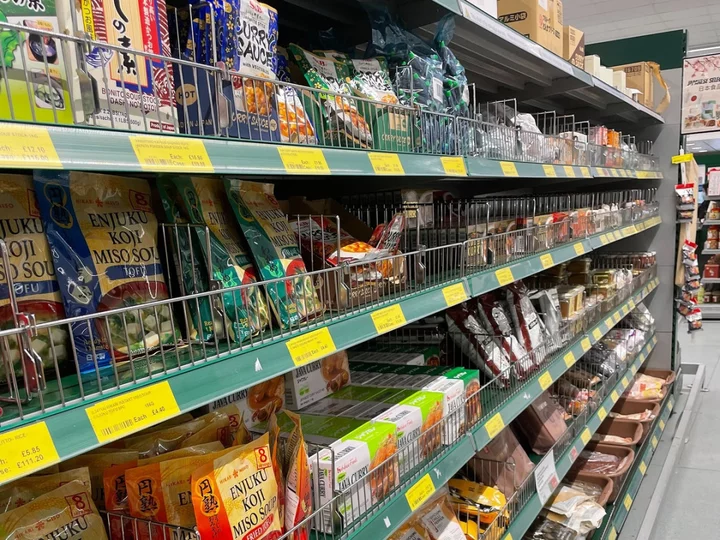
How to shop for and cook Japanese food at home like a pro
The dinner rotation is an unspoken, yet essential schedule. Most of us have five or six reliable recipes tucked away in our back pockets, ready to be pulled out at a moment’s notice. Sometimes this means cooking the same dishes week in, week out. Venturing outside this routine should be an exciting prospect. Maybe you’ve been inspired by a travel documentary or a new cookbook caught your eye. It doesn’t look that hard, right? But hunting down the right ingredients can feel like a minefield when you don’t really know what you’re looking for or even where to find them. Shopping well is crucial for success in the kitchen. God only knows the number of times I’ve come home with the wrong thing or given up because I was overwhelmed by the supermarket aisles. What if I end up wasting money on a new meal that turns out catastrophic? Some cuisines are more daunting than others. Japanese food has such a reputation for perfection that the idea of making anything other than a katsu at home terrifies me. But it wouldn’t be so scary if I had a real-life expert to walk me through the supermarket shelves, show me what to look for and demonstrate that I could indeed be churning out beautiful sushi, delicious broths and other Japanese dishes from my humble kitchen. Enter: cookbook author and teacher, Atsuko Ikeda, who has offered to take me to an Asian cash and carry to teach me how to shop for Japanese ingredients. We meet at Tazaki, a major distributor of Asian ingredients in the UK that has a warehouse in North Greenwich. It was previously owned by SeeWoo but was acquired by Tazaki last year and is currently in the process of revamping stock. However, it still carries just about everything you need to get started on a Japanese culinary adventure. Ikeda, who has authored three cookbooks on Japanese small plates, comfort food and sushi, is a frequent visitor. We begin by perusing the fresh ingredients, like daikon (white winter radish), whole lotus root and mustard greens. The whole lotus root can be sliced thinly and fried to make crispy lotus chips, while the snow-white daikon can be grated into sauce or cubed and added to soups. But we’re starting simpler. Ikeda picks up shimeji mushrooms, small round cap fungi with medium-length stems that grow from a single base. These have an earthier flavour and are denser in texture than regular button or chestnut mushrooms, which means they retain their size and shape a little better. Spring onions, avocado and carrots also make it into the basket, common vegetables that can be found in any supermarket. We move onto carbs and delve into the rice section. As Ikeda is teaching me how to make sushi later, she explains that it is made with Japanese short-grain rice; it has a more glutinous, starchy texture than long-grain rice, which is more popular in the UK. This starchy quality of short-grain rice makes it stickier, an essential feature to make sure sushi rolls and nigiri bites don’t fall apart. A trusted brand for most Japanese ingredients, including sushi rice, is Yutaka, which can be found almost anywhere – I’ve seen it stocked in my local fishmonger. Plenty of other brands abound, with some supermarkets even providing their own brand products, but Ikeda’s recommendation goes straight into my basket. She points out a variety of noodles, and we’re talking much more than udon. There are bouncy shirataki noodles, almost transparent noodles made from konjac yam that can be eaten hot or cold. You can purchase frozen ramen noodles if you’re experimenting with making your own ramen, but Ikeda winks as she tells me she usually just goes to her favourite ramen shop when she’s craving it. Soba noodles, which can be bought dried, are perfect for the summer when tossed into a cold peanut sauce with an assortment of vegetables. The list goes on and on, but Ikeda reassures me that most noodles are versatile and it mainly depends on what type of texture you’re going for rather than flavour. Next is the condiments aisle, where miso resides (can miso be considered a condiment? I’m not so sure). Miso is, of course, a must-have staple. Ikeda points out three types: white miso, sweet rice miso and barley miso. Later, when we taste them, I’m surprised to learn how vastly different they taste from one another. The white miso, which is the most common type used in recipes, has a slight tang and a savouriness that makes your mouth water, while the barley has a deeper, maltier flavour that is mcuh more comforting. I highly recommend buying different types to taste for yourself. Ikeda also introduces me to yuzugosho, a spicy, tart condiment containing the yuzu fruit and fiery green chillies. It brought a tear to my eye, both from the heat and delicious flavour. Ikeda also teaches me that most commercial wasabi contains more horseradish than wasabi, so buyer beware: if you’re seeking the real deal, you may have to be prepared to shell out more money than you initially think. Some brands are 100 per cent horseradish, marketed as wasabi, so checking the label is essential. The same goes for mirin, a Japanese sweet rice wine which varies in alcohol content. A good rule of thumb is that the cheaper the mirin, the lower the alcohol content. Soy sauce is another staple for most Asian cuisines, but there are differences. Ikeda prefers to use tamari soy sauce, which is thicker and, I find, not as intensely salty as the soy sauce you usually get in tiny fish-shaped plastic bottles from takeaways. At home, I’m a Kikkoman soy sauce fan, but Ikeda recommends Yutaka’s organic tamari soy sauce for a more mellow, sweeter flavour. In terms of proteins, it depends on what dish you want. We’re focused on fish, particularly sushi-grade salmon, which you can buy from Tazaki or most fishmongers. This is where I’m especially nervous, because it’s easy to get the cut wrong. However, knowledgeable fishmongers are your best friends when it comes to choosing the cut, so ask plenty of questions. Ikeda shows me how to slice the salmon for different types of sushi rolls and nigiri, as well as how to steam the fish in a baking parchment parcel, slathered in miso and accompanied by the shimeji mushrooms we’d purchased earlier. You can also add fish roe or masago caviar to your Japanese dishes. The bright orange spheres add a unique saltiness and a satisfying texture to sushi, but can also be used to top rice dishes or stirred through Japanese-inspired pastas. A reliable brand is Elsinore, which can be found in Waitrose. I still find the idea of making sushi daunting, but the supermarket aisles no longer feel so intimidating now that I have a clearer idea of what to look for. It reminds me of how fun it is to try something new in the kitchen and, armed with cookbooks from the experts, the delicious results will keep me coming back for more. Read More Grace Dent’s quick and easy recipes that only require the microwave Forest Side, review: Cumbrian produce elevated to Michelin-starred proportions Showstopping BBQ main dishes for a hot grill summer 7 TikTok food hacks that actually work Saltie Girl in Mayfair will make you happy as a clam – as long as you can afford it Chef Ravinder Bhogal: Vegetables are the secret to saving money
2023-06-12 13:58
You Might Like...
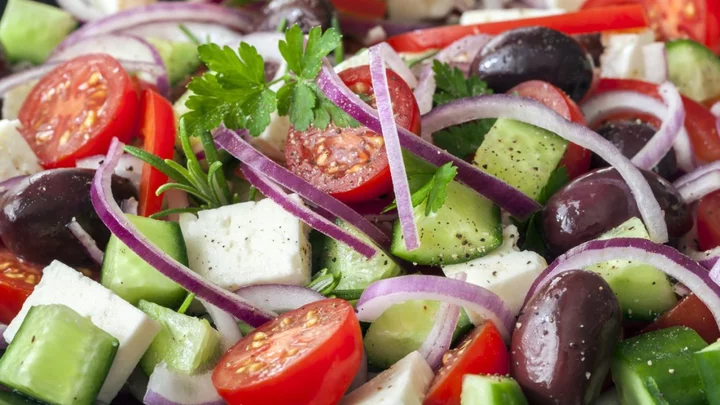
Scientists see brains 'de-ageing' in people who adopt a popular diet
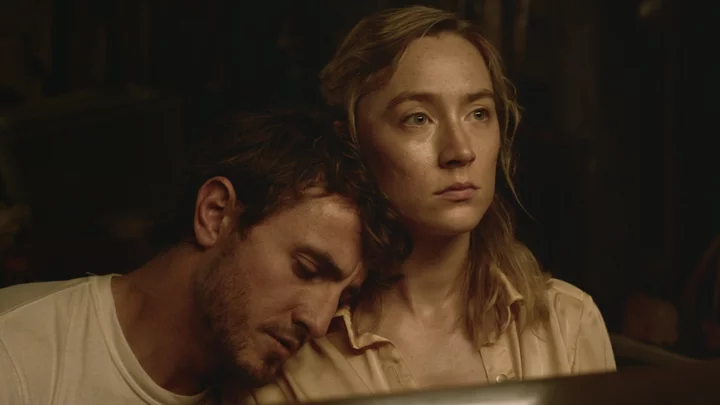
'Foe' review: Saoirse Ronan and Paul Mescal can't save this empty sci-fi mess

Al Pacino 'freaked' about embracing fatherhood again at 83 while in 'bad physical condition,' reveals source

Hiroshima's savoury pancake wins new fan in Britain's Sunak

How to watch North Carolina vs. Virginia without cable

The best Prime Day deals on printers to tide you over until the world goes paperless

Pence says he supports banning abortions for nonviable pregnancies

SpaceX to Conduct Second Starship Flight on Friday