

How to watch England vs. Tonga rugby league series online for free
This year has been all about Rugby Union, but that doesn't mean you should forget
2023-10-21 12:24
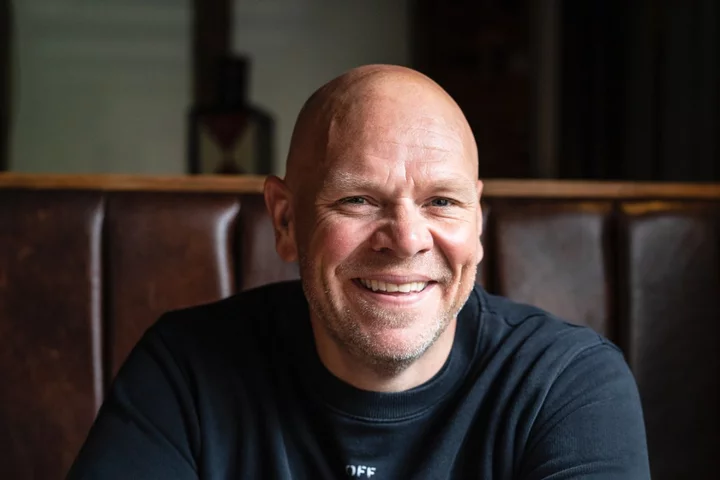
Tom Kerridge addresses backlash to his £35 fish and chips at Harrods: ‘They shout at me’
Tom Kerridge has defended charging £35 for fish and chips in luxury department store Harrods, explaining the quality of the ingredients and labour that go into the dish. The celebrity chef, 49, came under fire earlier this year for the costly dish at Kerridge’s Fish and Chips, which comprises of line-caught turbot and hand-cut potato chips. Some angry customers called the portion of fish “scrawny”, while others criticised the “thimbles of sauce” that accompanied the dish. But the Michelin-starred Kerridge – who has dealt with criticism of his prices in the past, including for an £87 sirloin steak in his Buckinghamshire pub – detailed the difference between his dish and a regular chippy’s fish and chips. Speaking to the Radio Times, Kerridge said that the backlash no longer affects him and he’s “learnt to deal with it”. “I’m seen as a man of the people, so when I put fish and chips on for £35, they shout at me for it being expensive,” he said. “But the people criticising me don’t understand how it’s priced. Fish and chips was always seen as cheap, fast food, and I get that because of where I grew up.” Kerridge went on to explain the supply chain behind a portion of fish and chips, saying: “The fish in most chippies is frozen at sea, in a big block, a year ago, then cut up and portioned. “The potatoes are maybe four weeks old, have gone through a chipper, been cleaned and put into cheap oil. They’re wrapped in paper, with malt vinegar and salt.” Kerridge clarified that he does “love” regular fish and chips, but that the dish he serves in Harrods is different. “At Harrods, it’s line-caught, day-boat turbot,” the Great British Menu judge said, referring to fish that is caught using traditional fishing methods by fishermen who go out to sea and return on the same day. “The potatoes are specifically sourced for their sugar and starch content, then individually cut up by a person. It’s bespoke dining in the most exclusive and beautiful shop in the world. Of course it’s expensive,” he added. In 2021, Kerridge defended the prices at his pub, arguing that they “include everything, VAT and service”. “No additional service charge at all. Also I pay staff properly and treat their job as a professional career. Perhaps the real cost of dining should be addressed,” he tweeted in response to a critic. “Unpretentious does not mean cheap. Also, why is profit a bad word?” Kerridge opened his first pub, The Hand and Flowers, alongside his wife Beth in 2005. Within a year, he had gained his first Michelin star. Since then, the TV personality has been given three Michelin stars, including a second for The Hand and Flowers, and the third for The Coach. He has appeared on numerous TV programmes such as MasterChef and Saturday Kitchen, and currently presents Food and Drink for BBC Two. Read More Sorry lads, we just can’t afford any more reckless, middle-aged adventurers Cruise line apologises after passengers witness dozens of pilot whales being slaughtered Delia Smith denounces vegan diets as ‘wrong’: ‘Don’t say you’re helping the planet’ 3 TikTok-approved recipes for picnic season Fans swoon over Stanley Tucci cooking dinner for Robert Downey Jr at ‘Casa Tucci’ The dish that defines me: Alex Outhwaite’s Vietnamese bun cha
2023-07-18 18:16
Elon Musk's creator monetization program fails to convince many to pay for X Premium
Elon Musk's latest pitch to get people to sign up for X's (fka Twitter's) paid
2023-08-15 03:51
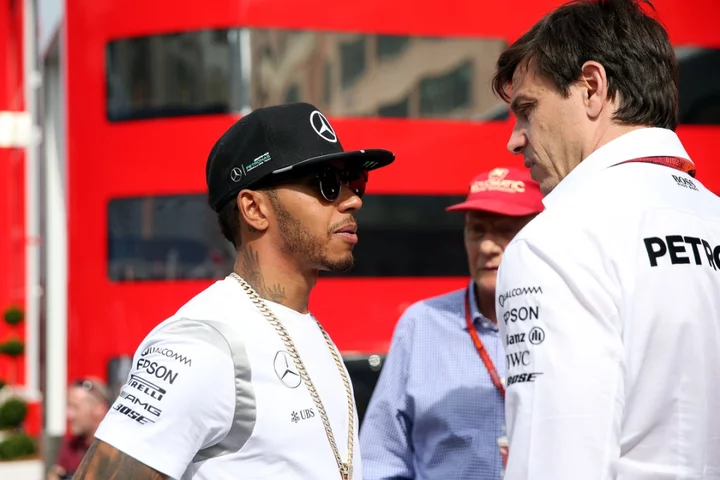
Toto Wolff fuelled by ‘personal anger’ to help Lewis Hamilton win eighth title
Mercedes boss Toto Wolff said he is fuelled by a personal anger and drive to help Lewis Hamilton win the record eighth world championship he was denied in Abu Dhabi. In an interview with the PA news agency ahead of this weekend’s blockbuster Las Vegas Grand Prix, team principal Wolff also revealed his own succession plan at Mercedes – in which he plans to skip as many as 10 races each season – and claimed Hamilton, 38, could compete in Formula One for at least another five years. Wolff has arrived in Sin City for the inaugural night race on the Las Vegas strip following Mercedes’ abysmal performance last time out in Brazil – one he described as the worst of his career. I have a personal anger, and drive to make him (Hamilton) win the eighth title because he should have had it Mercedes team principal Toto Wolff Hamilton finished 63 seconds behind winner Max Verstappen, and gloomily predicted he will not be a championship contender for the next two years. Next month will mark two years since the seven-time world champion last won a race, and that ill-fated evening in Abu Dhabi where race referee Michael Masi’s failure to imply the correct rules left him at the mercy of Verstappen. The Dutchman took the championship in the desert before quickly racking up another two titles in his all-conquering Red Bull. “We are living in a hamster wheel where time passes so quickly that it doesn’t feel like it has been two years,” said Wolff. “You can see how quickly the pecking order changes. We won eight constructors’ championships in a row, and it has been two years since Red Bull have been taking the trophy home. But we have to look forward, learn from the past, and the push now is to make Lewis win quickly again. “I have a personal anger, and drive to make him win the eighth title because he should have had it. “As a team principal, it is important to be fair and open with both drivers. But there is a big part of us that will always want to be a part of that story in undoing and overcoming 2021.” Hamilton will start a new two-year deal with the Silver Arrows next season, worth an estimated £100million. He will be nearly 41 at the conclusion of the contract, but Wolff does not believe it will be his last with Mercedes. “We are living from contract-to-contract, and it is important that we are doing what we think is right and what we feel is right, and at the moment I personally feel he can go longer,” added the Austrian. And could he carry on for another five years? “He is 39 in January, and Fernando (Alonso – 42) is still going strong,” replied Wolff. “As long as you look after yourself, you do the best preparation, physically and mentally, and develop different areas to when you are 25, then yes. “We just need to give him a car that is quick enough. And, as a driver, I have no doubt about him. You have seen in the last races that his performance, speed and race craft are all there. But, if he doesn’t have the car underneath him, he cannot win.” Wolff oversaw Mercedes’ crushing dominance which led to Hamilton winning six of his record-equalling seven world crowns. But Wolff’s future as team principal is in the spotlight following Mercedes’ dramatic demise. And although he admitted he intends to stay on as team principal, the 51-year-old, who also holds a one-third shareholding in Mercedes, is plotting his succession plan. “The clear aim is to build a structure for the future and that is my sheer responsibility for the team,” said Wolff, who was absent from the races in Japan and Qatar earlier this season following knee surgery. “A stone could fall on my head and how does it look afterwards? That is why I would like to see myself in a few years maybe not going to 24 races, and just to 15. “But that is many years away. I see myself in this role for a long time. I cannot imagine doing something else. “I really struggled in 2020 to make a decision on whether I wanted to stay active in the sport or to be a shareholder and go back to my finance world. I was tired, mentally and physically, but then I came to the realisation that I wanted to continue. “I feel I am contributing to the team in the crossover world of finance and motor racing, and I have a passion for both, and that is why I continue to do it.” Over at Red Bull, Verstappen has won 17 of the 20 rounds so far – which included a record 10-in-a-row streak – in the most dominant season the sport has ever witnessed. Wolff caused controversy when he poured scorn on Verstappen’s achievements, calling them “irrelevant” and “only for Wikipedia and nobody reads that anyway”. “It was not an intelligent thing to say,” said Wolff. “There were all these numbers about how many races we had won, and we used to joke that who cares about the numbers? It only goes on Wikipedia, and nobody reads that anyway. It was a joke, but it is much easier to joke about your own records than somebody else’s. “His records are unbelievable and what he has been able to achieve clearly ranks him amongst the greatest drivers in the sport at that young age. I have clarified that with him.” Read More On this day in 2010: Sebastian Vettel becomes youngest ever F1 world champion Lewis Hamilton ‘counting down days’ to end of season after another poor race Max Verstappen thwarts Lando Norris’ bid for first F1 win with sprint victory On this day in 2015: Susie Wolff ends her bid to get on an F1 starting grid Lando Norris ‘gutted’ to miss out on Brazilian GP pole after McLaren blunder Carlos Sainz leads Ferrari one-two in Brazilian Grand Prix practice
2023-11-15 17:21
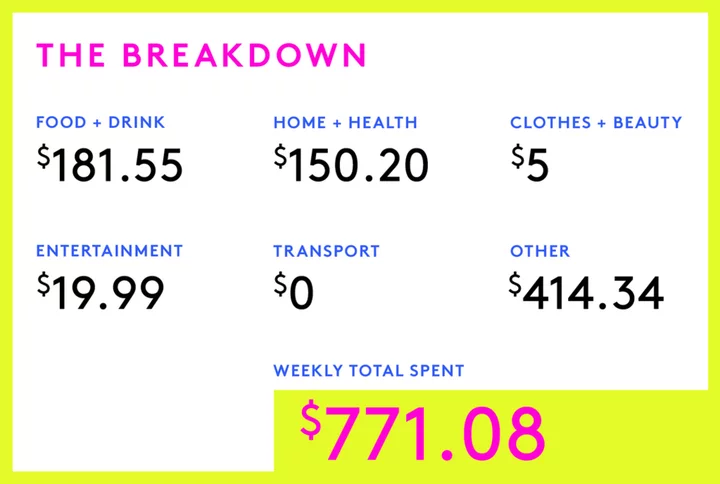
A Week In The Suburbs Of D.C. On A $153,000 Joint Income
Welcome to Money Diaries where we are tackling the ever-present taboo that is money. We’re asking real people how they spend their hard-earned money during a seven-day period — and we’re tracking every last dollar.
2023-08-04 23:58

Online misinformation runs rampant during coup attempt in Russia
The potential coup attempt in Russia by a paramilitary organization may already be over, but
2023-06-25 04:59

More girls miss school and college due to their periods than colds, survey finds
Girls miss more school or college days due to periods than any other reason – including colds, mental health or truancy, according to a new report. Periods cause girls to be absent from school or college for three days a term on average, compared with colds and flu (2.6 days), mental health (1.9 days) and truancy (1.2 days), the data released by washroom provider phs Group has revealed. This equates to 54 lost education days over the course of their teen years, the equivalent of 11 academic weeks. The findings form part of phs Group’s Period Equality: Breaking the Cycle report, now in its third year, for which Censuswide polled 1,262 girls aged 13-18 years across the UK. The majority (82%) cited cramps as the main reason for this, while almost one in five (19%) said they stay away from lessons because they’re embarrassed about being on their period, and one in 12 (8%) said it’s because no period products were available to them. This is despite the introduction of period equality measures in recent years, designed to improve access to free period products in education settings. “It’s important to recognise that huge advances have been made in giving girls access to free period products in schools across the UK. What we must do now is close the gap between providing schools with all the products they need and getting them into the hands of any girls that need them, for whatever reason,” said Kelly Greenaway, period equality lead at phs Group. “We know from our own data providing schools with products, that they have more than enough for their girls, so we need to tackle the misconceptions around free access to products in washrooms, and the stigma and shame that goes hand-in-hand with failing to have open conversations about menstruation.” Since the launch of the Government’s Period Product Scheme in January 2020, which provides free period products to education settings in England, via phs Group, 99% of secondary schools and 94% of post-16 organisations have ordered products through the scheme. However, the report published today highlights how periods remain a barrier to education for many girls – with the number of girls missing school due to their periods almost the same for the 2023 findings (54%) as the findings in 2019 (52%), before free sanitary product schemes were introduced. Despite the roll-out of such schemes, over half (52%) of the students surveyed said they did not find period products freely available in their school and college settings, while one in seven (14%) said they did not know if they were available. To help tackle the issue and raise awareness, phs Group is launching a new period equality podcast – called The Blobcast: Free The Period – hosted by menstrual wellbeing and confidence educator Kasey Robinson. Robinson said: “I know too well about the barriers facing so many of us when it comes to our menstrual health. It’s simply not enough to blame absenteeism figures on access to products alone. “On the ground, the story is clear: we aren’t being educated, supported and informed enough about periods. Menstruation is still a taboo subject, and our experience is a secret to keep to ourselves and something we feel forced to hide. In education settings, this is leading to more and more girls staying away from school. “Without workshops, learning resources and the support for and from teachers and caregivers, this issue will stay the same, or get worse,” Robinson added. “It should not be a revolutionary act to teach people about periods, it’s a right. We need to break the cycle of shame and encourage open and honest conversations about periods – exactly what The Blobcast is seeking to do.” The Blobcast: Free The Period launches on all free streaming platforms on October 18. More information can be found at www.phs.co.uk/TheBlobcast.
2023-10-18 13:29
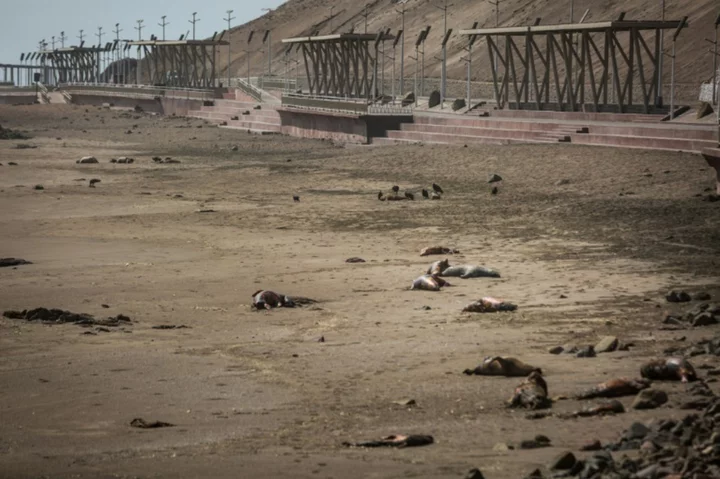
Bird flu fells nearly 9,000 marine creatures in Chile
Nearly 9,000 sea lions, penguins, otters and small cetaceans have died in an avian flu outbreak battering Chile's north coast, the South American country's...
2023-05-26 05:23

Metal detectorists find 2,000-year-old Iron Age gold treasure in Welsh first
Gold coins dating back more than 2,000 years have been found by metal detectorists in Wales, making them the first hoard of Iron Age gold coins to have been discovered in the country.
2023-08-15 23:20
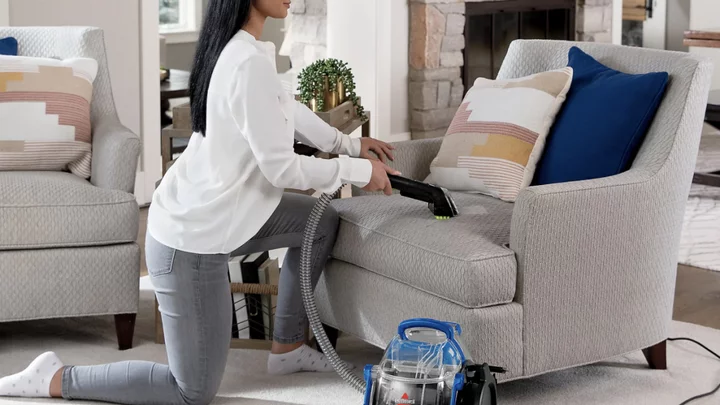
Bissell's Memorial Day sale gets you up to 20% off your favorite cleaning supplies
SAVE 20%: As of May 26, Bissell is having a sitewide Memorial Day sale, with
2023-05-26 22:45
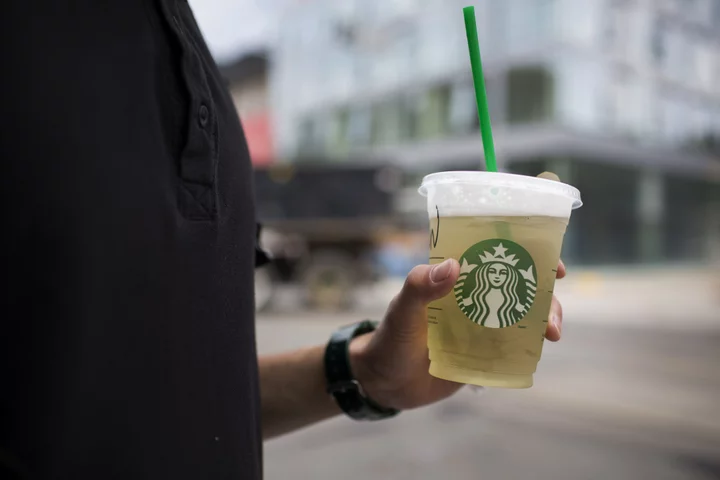
Starbucks Investors Want to Know How the New CEO Will Meet Big Targets
Now is Laxman Narasimhan’s chance to sell Wall Street on how he’ll deliver on the brisk sales and
2023-11-01 22:19
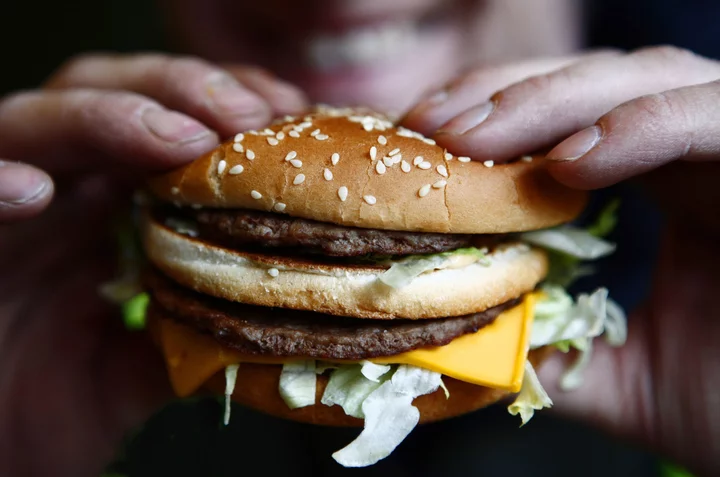
McDonald’s Sales Top Estimates With Help From Pricier Burgers
McDonald’s Corp. sales and profits beat expectations in the third quarter thanks to higher prices and movie-inspired ads
2023-10-30 19:50
You Might Like...
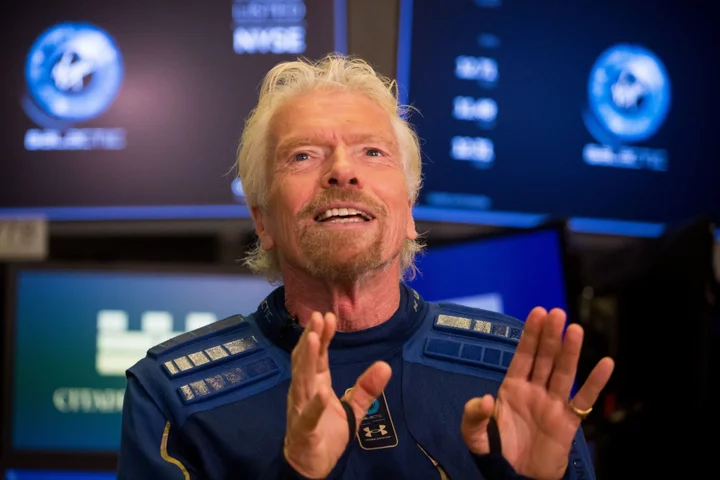
Virgin Galactic Reaches Space in Long-Overdue Commercial Debut
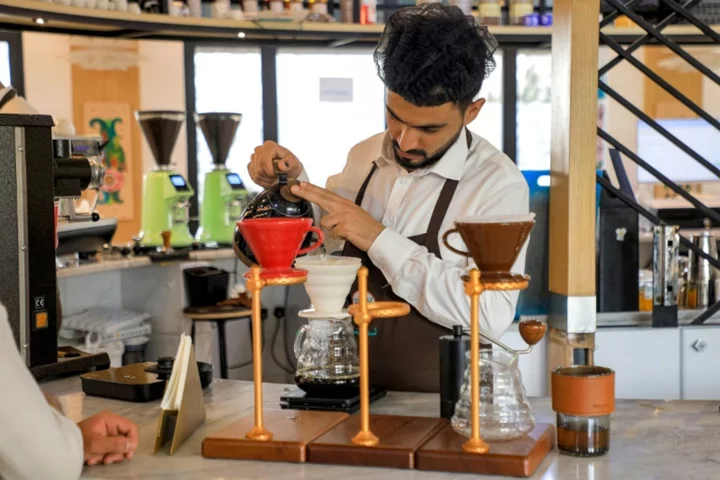
Yemen speciality coffee 'wave' sweeps war-hit capital
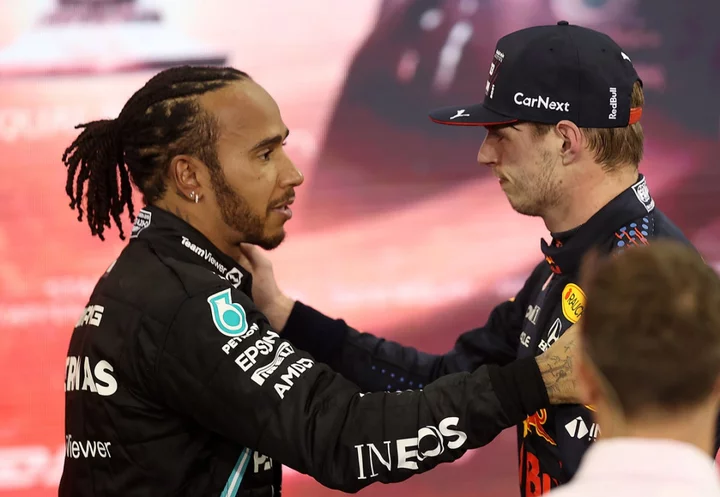
Mayhem, mischief and Masi: Abu Dhabi, two years on

Big bang: Dutch firm eyes space baby
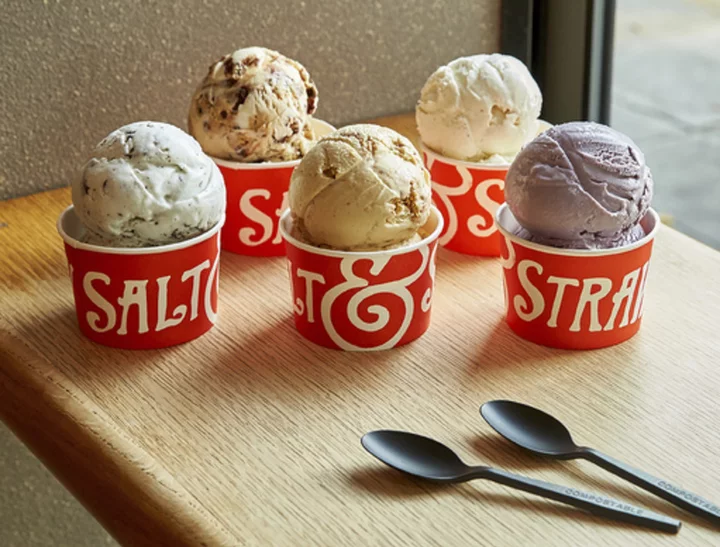
Creative ice cream flavors could make this a sweet, savory, scoop-worthy summer

Mum’s husband fired from family business after she roleplayed with reborn dolls

'Looks like a bathing suit': Wedding guest slammed for wearing white dress that shows her underwear

France to spend €200m destroying wine as demand falls