

'Jeopardy!' host Ken Jennings flexes his favorite sports apparel line during game show hiatus
'Jeopardy!' host Ken Jennings openly endorsed his favorite sports apparel line that he said could beat Nike in its own game
2023-06-01 12:25

Hollywood Strikes Threaten Britain’s US-Dependent Film Industry
The UK film industry is reckoning with its streaming-fueled reliance on US media giants after Hollywood strikes have
2023-08-14 12:28

Apple Music Favorites are a thing in iOS 17.1. Here's what else is new.
Apple's first developer beta for iOS 17.1 is here, and it actually has a decent
2023-09-28 20:26
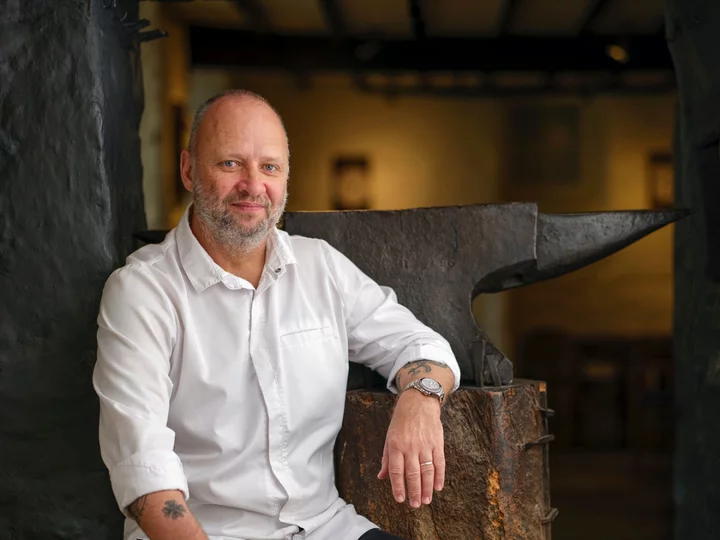
Michelin-starred chef Simon Rogan on 20 years of L’Enclume: ‘It all started with a radish’
In Cartmel, a picture-postcard Cumbrian village on the cusp of the Lake District, chefs in their whites are scurrying across the cobbled streets like an army of well-dressed worker ants. Some are heaving wheelbarrows stacked with mounds of freshly picked vegetables, still earthy from the farm; others are dashing from one building to another, precariously balancing enormous stacks of clean pans. They all have one thing in common: they work for Simon Rogan. If they’re the workers, he’s the queen. This well-rehearsed choreography is a typical sight every morning in Cartmel, where the Michelin-starred chef – one of only eight to own a three-starred restaurant in the UK – set up shop 20 years ago. After a decade of working at various levels in restaurants around the country (including a placement under Marco Pierre White and two years at the three-star Lucas Carton in Paris), Rogan was keen to open his own restaurant. Priced out of Hampshire and Sussex, he looked further afield and found a rundown 800-year-old former smithy in Cartmel available to rent. “I didn’t come here for anything as glamorous as the area or the scenery or the people,” he tells me, having just taken me on a tour of said area to meet said people. “It was just for this building. I was desperate for my own restaurant. I felt like I had never really achieved the things that I’d wanted to working for other people. I wanted to make my own mistakes and be in control of our own destiny. I know it sounds cheesy, but it’s true.” He made an offer on his way back from his first visit to the area, and L’Enclume was born. “Once you realise where you are, you think: s***, this is beautiful,” he adds, laughing. Over the next two decades, the ambitious chef transformed the Cumbrian village into a culinary destination unlike anywhere else in the UK. It’s now home to not only L’Enclume – awarded the environmental green star in 2021 and the coveted third star in last year’s Michelin Guide – but also the one-starred neighbourhood eatery Rogan & Co, and Aulis, L’Enclume’s six-seater chef’s table behind the main restaurant. He also put his name to Henrock, a more informal and relaxed offering just a half hour’s drive away at Linthwaite House, overlooking Lake Windermere. The engine behind this mini empire, and the reason I’m here, is Our Farm, a 12-acre plot in Cartmel that supplies the majority of the restaurants’ ingredients. A sustainable, closed-loop growing operation had always been “at the back of his mind”, Rogan says. He was inspired by his father, a fruit and vegetable salesman who would bring home a box of the day’s best produce, teaching him the importance of using every part of the ingredient. When they arrived in Cartmel to get started, though, “the standard of produce”, Rogan says “was absolutely rubbish. The reason we got into farming was my frustration at the ability to buy a perfect radish, which is the easiest thing in the world to grow.” They rented a small plot close to the restaurant, and filled in the gaps with local suppliers. But, back in 2002, it was too expensive to buy organic. “Things were triple the price they are now,” Rogan tells me, taking a sip of his beetroot juice at the Aulis counter. “So we bought little bits and pieces here and there alongside the normal suppliers. Then we had the opportunity to take over the farm. That’s when we thought: ‘Right, let’s start growing radishes.’” What started as a little garden has become something bigger than he could ever have anticipated. A restaurant growing its own produce is not a groundbreaking concept, but a kitchen garden this is not. You won’t find pristine beds and trimmed rose bushes and arty ornaments. But you will find a patchwork of muddy fields growing hardy vegetables, the topsoil painstakingly “fluffed” by hand; a regiment of polytunnels housing the more finicky plants, delicate micro herbs and other culinary experiments (I try something that tastes like pickled onion Monster Munch); and enormous hand-rotated compost bins that process all the food waste from the restaurants into mulch for the farm. All this is surrounded by hedgerows that have been carefully curated to attract birds and other wildlife to act as natural pesticides. None of this would be possible without head farmer John Rowland. Regenerative agriculture might be his trade, but birds are his true passion. During a tour of the farm, he lists off the species he’s seen circling overhead, drawn by the blackthorn, hawthorn, rowan and birch trees he’s been planting on the borders. “We cater for the birds more than the people,” he tells me, in a Welsh accent so bucolic I wonder whether he’s been shipped in specifically for the tour. “Everything on the farm has a use, and not only in a culinary way. The seeds and the berries attract the birds onto the farm. The birds are my pest control, so the more I can attract to the farm, the more pest control I have, and that is fantastic for birdlife. In Britain, we’ve lost 84 per cent of our bird species, but this area is really rich because of these techniques.” While he might prefer looking upwards, it’s what’s beneath our feet that Rowland is really focused on. “The life is in the soil,” he says, grabbing a great fistful of the stuff. “You have hundreds of types of fungus right here. We don’t want to disturb that biome in the ground so rather than rotavating the soil [breaking up the earth with a machine ready for planting] and destroying the millions of organisms that live in it, we build a six-inch layer of compost on top and aerate it with a fork. Once you’ve done that, each year you just top it off with an inch, and that’s regenerative farming,” he says matter-of-factly, clapping the dirt from his hands. Well, that’s the gist anyway, and while it’s perhaps a little more complicated than that, Rowland struggles to understand why more people aren’t farming in this way. “We’re the most nature-depleted country in the world. We’ve lost our wildflower meadows, we’ve lost our insect population, we’ve lost our wild songbird population. They’ve taken the hedgerows away to make the fields bigger. All the natural food in our countryside is being lost to intensive farming.” Regenerative techniques like those Rowland is putting into practice on Our Farm would go some way to reclaiming it, he says, but “it’s a shame that they don’t realise that”. He pauses for a moment, then corrects himself: “Well, it’s not that they don’t realise it. They know. It’s just that they want intensive farming because it makes them money and it’s wrong because we are killing everything.” How this translates to the table at L’Enclume is manifold. Every dish on the menu begins life on the farm, where Rowland will flag what’s in season and at its best, or suggest something new he’s been experimenting with. Or it might start as an ingredient foraged from the countryside or sourced from a local supplier. The idea is then tweaked in the development kitchen at Aulis, before it finally makes its way to the pass at L’Enclume. This results in a transient snapshot of Cumbrian cuisine that changes every time you dine, and a menu quite unlike anything else I’ve come across. When I visit in February, Boltardy beetroot – a variety chosen for its resistance to erratic weather – shines in a bitesize tart with smoked pike-perch fished locally, and perilla, a Southeast Asian herb cultivated on the farm that adds notes of mint and licorice. Elsewhere, there’s lovage and rose hip and lemon thyme, all foraged; there’s Cornish cod and Mylor prawns and potted shrimp and Maldon oysters; sweetcorn and champagne rhubarb from the farm that were fermented after they were harvested last summer so they could be used year-round; and an enormous selection of British cheeses, including Tunworth, which is frozen and crumbled in a palate-perplexing, salty-sweet dessert. It happens to be my favourite dish. Managing a farm-to-fork operation this complex, not to mention the empire, is no mean feat. “I could pretty confidently be a tax exile given how little I am in the UK at the moment,” he jokes. When we chatted in February, the team was preparing to revive their pre-Covid plan for a five-week residency in Sydney, which concluded this month. The punchline, of course, is the delay meant Aussies were given a taste of not a two-star L’Enclume, but all four stars. Given Australia is yet to receive a Michelin Guide and is not particularly well known for its agricultural sustainability, it was an interesting move, but one there is clearly appetite for. Despite the $420-a-head price tag, it was sold out, serving more than 4,000 diners. While the food at L’Enclume, at home and abroad, is clearly special, it’s the people that set it apart from other restaurants in this league. Their hospitality, affability and, perhaps most noticeably, northern accents, are not typically what you find at this price bracket (£250 a head for the tasting menu, plus £100-£290 for a pairing). Stuffiness is neither present nor tolerated. Many of the staff have been with Rogan since the beginning, switched between the restaurants, or left for pastures new only to return. “We get a lot of people coming back – only the ones we want, anyway,” he says slyly. There’s certainly been a few famous quarrels. The “Rogan alumni” is a term thrown around a lot during my visit, and includes Mark Birchall, who was executive chef at L’Enclume during its two-star era before setting up a curiously similar “restaurant with rooms”, Moor Hall, in Lancashire, which also boasts two stars and a further green. Then there’s Dan Cox, who cut his teeth at Rogan’s now-closed Fera in Claridges as well as L’Enclume, and helped him set up Our Farm in the early days. He’s now down in Cornwall, running the farm-to-table Crocadon. But, generally, people are drawn back to L’Enclume for the variety it has to offer. “Look around the country,” says Rogan, “and [other restaurants] haven’t got any staff because they can’t offer as many career progression opportunities for people. I suppose that makes them lucky. “It’s about not spreading yourself too thin. We’re only able to do these things because these guys are really, really hungry.” Acknowledging that hunger, he established the Simon Rogan Academy in 2021 to “nurture aspiring chefs”. It includes paid work across the Cartmel restaurants, and culminates in a week-long placement at his restaurant Roganic in Hong Kong. In the beginning, “we thought that maybe if we had just a third of them left at the end of the quarter, it’d be brilliant,” Rogan tells me. “But almost all of them stayed on! And now they all want jobs” – he comically rolls his eyes – “but really it’s great.” As I drift between the farm and the Cartmel restaurants, everyone hard at work but always smiling, it strikes me that L’Enclume isn’t just a restaurant; it’s a story. And its influence is immense. “Sustainability”, “farm-to-table” and “regenerative agriculture” were mere whisperings 20 years ago. Now they’re affixed to almost every new menu, and you could say they were born here. The people I’ve met could well be the next batch of Rogan alumni, attracting Michelin’s attention with their own restaurants in years to come. If it takes 20 years to craft a legacy like this, then I’ll make sure I come back in 2043. For more information about L’Enclume, visit www.lenclume.co.uk and for more information about Simon Rogan and his other restaurants visit www.simonrogan.co.uk Read More Why I won’t be doing Veganuary this year – or ever again Marina O’Loughlin is wrong – there’s joy in solo dining Michel Roux Jr announces closure of renowned restaurant Le Gavroche to have ‘better work/life balance’ The true story – and murky history – of Portuguese piri piri oil 30-minute summer recipes for all the family to enjoy What to cook this week: Tomato tart, sweetcorn pasta and other summery suppers
2023-08-27 13:56
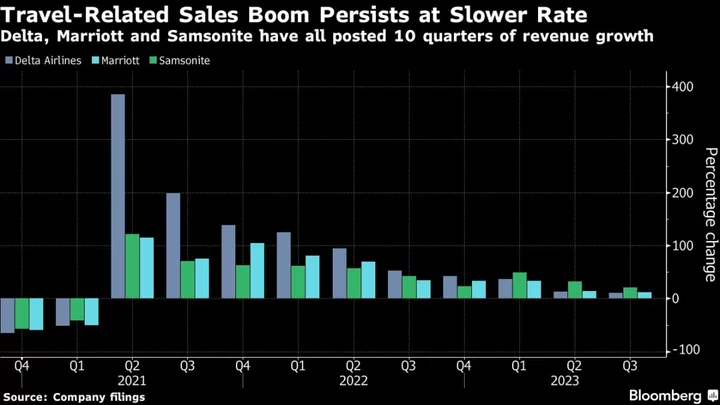
Taylor Swift Tickets, Paris Trips and Dining Out: Consumers Splurge Even as Savings Fall
A group of US consumers has surprised companies and economists by splurging on Taylor Swift concerts, trips to
2023-11-24 19:19

Emily Ratajkowski’s latest photo shoot sparks fury among plus-size advocates: ‘Out of touch’
Emily Ratajkowski’s latest photo shoot has sparked backlash among plus-size models and activists, who claim it promotes unhealthy narratives about body image. The supermodel, 32, recently shared several images from her photo shoot with M Le Monde magazine. For the fashion editorial photographed by Oliver Hadlee Pearch, Ratajkowski posed in a variety of looks featuring denim jeans and flowing tops. However, it was the second image that caught the attention of her Instagram followers. In the photo, Ratajkowski is seen wearing a pair of low-rise, wide-leg denim jeans double her size. She showed off her toned figure as the oversized pair of jeans fell at her feet. As she held up the waistband of the jeans with one arm, Ratajkowski stood in one leg of the pair of jeans to highlight the noticeable size gap. The photo shoot - which was styled by Charlotte Collet and creative directed by Jean-Baptiste Talbourdet-Napoleone - instantly sparked backlash after Ratajkowski shared the images to Instagram. In her comments section, thousands of users criticised both Ratajkowski and the team behind the photo shoot for the “out of touch” image and claimed the photo shoot was “fatphobic”. Famous plus-size models and inclusivity advocates - such as Tess Holliday, Kelly Augustine, Stephanie Yeboah, Letticia Munniz, and Sarah Chiwaya - have called out the photo for emphasising Ratajkowski’s thinness in a pair of pants that would typically be reserved for someone who is plus-size. “I’ve been looking for those jeans in the second photo if you could just please return them that would cool. Tysm,” Holliday commented under Ratajkowski’s post. “That second photo is such godforsaken trash,” wrote Chiwaya. “In the year of our lord 2023?? STILL??? Yikes.” “What in the fatphobic hell is that second picture?” a third user commented, while someone else said: “That second pic is so out of touch and ignorant but the comments are chef’s kiss.” Plus-size models have long advocated for more inclusive sizing - both in stores and on the runway. However, luxury brands and labels often avoid creating plus-size fashion over claims that it’s too expensive to make. “Designers won’t make plus sizes unless it’s for a photo opp where a thin person can be quirky,” another person pointed out. Many people were especially surprised by the “distasteful” photo shoot considering Ratajkowski has published a book of essays about feminist empowerment and the objectification of women’s bodies, titled My Body. “Not sure how you think wearing oversized jeans made for a much larger person and accentuating your smallness promotes healthy body image like you preach in your books/social media,” an Instagram user said. Since she shared snaps from the photo shoot over the weekend, Ratajkowski has not yet commented on the backlash. Despite the controversial editorial, the model has previously spoken out against body-shaming. In her book of essays, Ratajkowski discusses bodily autonomy and exploitation in the modelling industry. “Every woman I know - doesn’t matter what they look like, or if they’ve commodified their image or not - knows what it feels like to be looked at, to be rejected, to get attention for how they look,” she told The Independent in 2021. Back in 2019, Ratajkowski defended her friend against body-shaming trolls after their bodies were compared on Instagram. The model shared a bikini-clad post to promote her swimwear line, Inamorata, but several users accused Ratajkowski of sharing the photograph to make her body look “better”. In response, Ratajkowski commented: “I love my friend’s body and both her and I think she looks great here! And I’m proud she’s rocking my suits. All these haters are crazy. Just because you’re used to seeing one body type on the internet doesn’t mean that that’s the only kind that should be considered ‘beautiful’.” While the body positivity movement has made waves over the past 10 years, this year in fashion was especially devoid of inclusivity or plus size models. According to Vogue’s Business Size Inclusivity Report, only 0.6 per cent of looks shown throughout the autumn/winter 2023 fashion season were modelled by plus-size people. Despite the fact that the plus-size clothing market is expected to reach $288bn this year, according to Future Market Insights, advocates have maintained that they’re unable to purchase clothing that’s both sustainable and inclusive. “I have to wear fast fashion and high street to major red carpet moments, and that’s great, but I want the option to wear high end items of my choosing and it’s not available,” Holliday told Elle UK in 2019. “But it’s either that or I run around naked. Plus-size fashion is not there yet.” The Independent has contacted representatives for Ratajkowski and M Le Monde for comment. Read More 6 fashion secrets used by the royal family Fans defend Dolly Parton for wearing Dallas Cowboys cheerleader outfit Gabriella Karefa-Johnson confirms she resigned from Vogue 6 fashion secrets used by the royal family Fans defend Dolly Parton for wearing Dallas Cowboys cheerleader outfit Gabriella Karefa-Johnson confirms she resigned from Vogue
2023-11-29 02:15

How to watch Louisville vs. Pitt without cable
How to watch Louisville vs. Pitt college football game Best Overall YouTube TV 3-week free
2023-10-13 17:50
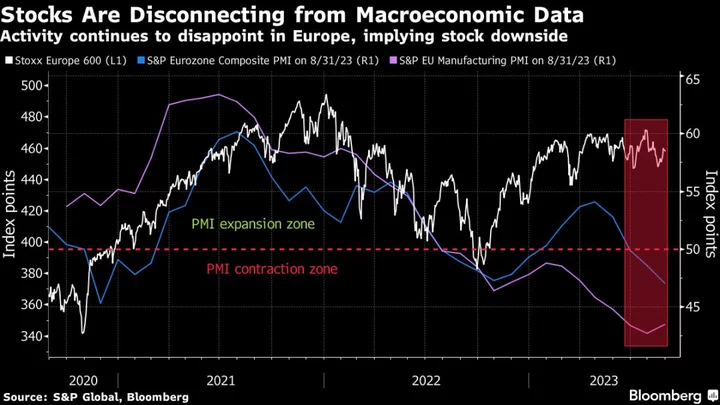
European Stocks Decline as Weak China Data Weighs; Luxury Slides
European equities fell at open on Tuesday as disappointing China data added to concern over the nation’s fragile
2023-09-05 16:26

Everything you need to know about hay fever I Decomplicated
Hay fever affects millions around the globe. A seasonal pollen allergy, hay fever is more than just sneezing or watery eyes and can lead to debilitating symptoms that last for weeks or even months. With changing weather patterns, hay fever is becoming increasingly frequent and more severe each year. What don’t we know about hay fever? When does it happen? And will there ever be a cure? Independent TV‘s Decomplicated series explains the global hay fever crisis. Watch Decomplicated on Independent TV on site, mobile, and connected TV.
2023-06-09 21:54

You've got to see Webb telescope's eerie view of the Crab Nebula
In the year 1054 CE, astronomers saw a strange bright light appear in the sky.
2023-10-31 17:54

How to Download YouTube Videos
There are billions of hours of video on YouTube, literally. And that's hardly the most
2023-09-02 21:48

Air France Plans to Abandon Orly Airport
Air France’s decision to dramatically thin out its domestic network highlights a trend set in motion even before
2023-10-18 22:47
You Might Like...
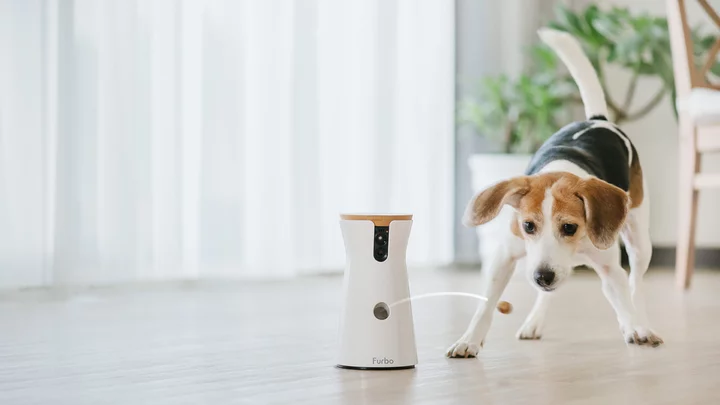
The Best Pet Cameras for 2023

'Fair Play' review: Does this corporate thriller live up to the hype?
How to style your home like a professional
Roark Capital Set to Win Bidding for Subway in $9 Billion Deal

Max Verstappen sets practice pace after Carlos Sainz crashes
Canada says major grocery chains agree to help stabilize prices
Temu: Risk fast-fashion website uses forced labour
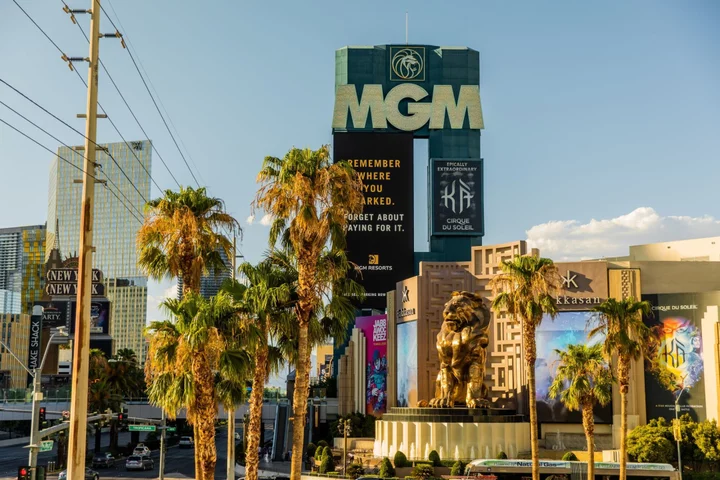
MGM Resorts Tops Estimates on Gains in Vegas, Macau