
Balloons, bands and Santa: Macy’s Thanksgiving Day Parade ushers in holiday season in New York
Beloved cartoon characters like Snoopy and SpongeBob SquarePants are taking to the skies above New York City in the annual Macy’s Thanksgiving Day Parade
2023-11-23 23:48
Get Paid $600 to Eat Cake and Watch ‘The Great British Baking Show’
What better way to celebrate a new season of 'The Great British Bake Off' than by sampling 12 classic British baked goods for cash?
2023-09-01 03:21
30 of the best Stanford University courses you can take online for free
TL;DR: Take a wide range of free online courses from Stanford University on edX. Take
2023-07-04 11:48
Hollywood Landlord Hudson Pacific Slashes Dividend After Writers Strike
Hudson Pacific Properties Inc., a major landlord in Hollywood, withdrew its 2023 financial guidance and plans to slash
2023-05-09 07:45
Experts share 8 healthy habits to help you live longer
Eight habits that could help people live more than 20 years longer have been identified by researchers. While it’s long been known that certain lifestyle factors can influence lifespan, the American study isolated the eight factors that have the biggest impact – being physically active, being free from opioid addiction, not smoking, managing stress, having a good diet, not regularly binge drinking, having good sleep hygiene, and having positive social relationships. The research was presented at Nutrition 2023, the annual meeting of the American Society for Nutrition, and used data from 719,147 people enrolled in the Veterans Affairs Million Veteran Program. It found low physical activity, opioid use and smoking were associated with around a 30-45 per cent higher risk of death, while stress, binge drinking, poor diet, and poor sleep hygiene were each associated with around a 20 per cent increase, and lack of positive social relationships was linked with a 5% increased risk of dying. Men who had all eight habits at age 40 were predicted to live an average 24 years longer than men with none of the habits, according to the findings, and women with all eight habits in middle age were predicted to live an extra 21 years, compared with women with none of the habits. Xuan-Mai Nguyen, health science specialist at the Department of Veterans Affairs, said: “We were really surprised by just how much could be gained with the adoption of one, two, three, or all eight lifestyle factors. Our research findings suggest that adopting a healthy lifestyle is important for both public health and personal wellness. The earlier the better, but even if you only make a small change in your 40s, 50s, or 60s, it still is beneficial.” The researchers say the findings highlight how lifestyle factors contribute to chronic diseases such as type 2 diabetes and heart disease, which are associated with premature disability and death. How to embrace the eight healthy habits Inspired to give your own lifestyle a boost? “If making these small but mighty adjustments could help you to live for an extra 20 years, maybe it’s time to make those changes,” says life and wellbeing coach, Natalie Trice. She shares the following insights and tips… 1. Do more exercise Regular exercise can help prevent a wide range of major diseases – plus it’s great for keeping stress levels in check. “Going for a walk, having a swim, running with friends, even just a good old dance-off in the kitchen can get your heartbeat up and those feel-good endorphins pumping – so get your trainers on and start moving,” says Trice. 2. Manage stress Trice suggests adopting simple stress-busting practices such as mindfulness meditation, and enjoying hobbies and sports. “These can profoundly impact overall wellbeing, as you bring your stress levels down,” she says. “This isn’t about pretending everything’s great, but rather looking at easy habits you can adopt that will take down the stress, which can lead to anxiety and burnout.” 3. Don’t smoke Quitting smoking is an essential step in improving health and potentially adding years to your life. Trice points out that while some people may think reaching for a cigarette takes the edge off their stress, there are healthier ways to cope. “Maybe going running or taking up yoga could be the release and focus you need, and one that will help you live longer, smell fresher and feel better,” she suggests. “Also, with the cost of cigarettes going up all the time, giving up will free up cash for the things in life that really need to be paid for.”If you are struggling to quit smoking, talk to your GP about options available to help. 4. Don’t binge drink “By cutting down on booze, you’re doing your body and brain a massive favour,” says Trice. “Drinking every night will impact your body and could affect your sleep and work performance. Enjoy life, but if you want to enjoy it for longer, then keep tabs on your drinking.” Official guidelines suggest drinking no more than 14 units of alcohol a week (equivalent to six medium glasses of wine of six pints of beer), spread across at least three days. 5. Eat healthily Generally speaking, a balanced diet that’s rich in fibre, whole grains, fruit and veg and lean protein, with heavily processed and sugary foods kept to a minimum, is linked with better health. “We all know about eating five-a-day but doing this can be tough if you’re busy with family and work. If you can start to do this, you’ll feel better,” says Trice. “Focus on eating regularly and thinking about what you put in your body, so that it works for you, not against you.” 6. Don’t take drugs Recreational drugs can harm health in a number of ways. Trice suggests those affected start by speaking to a trusted friend or their GP, and “look at the support which could not only extend your life, but save it”. 7. Try to get good sleep Trice says: “It’s vital that we look at getting a decent night’s sleep, as this can help you feel so much better. Making sure you have a sleep routine in place can be helpful and can be as easy as having no screens in the bedroom, having a bath or shower before you hit the sack, as well as making sure the temperature is right and you have curtains to keep the light out in the mornings.” 8. Nurture positive social relationshipsTrice observes: “If you’re able to nurture a supportive network of friends, colleagues and family, this can lead to improved mental and emotional wellbeing and a longer life.” Lacking social connections? Look at local volunteering opportunities and community walks and groups. Making friends can take time, but even finding ways to regularly spend time and interact with others can help. Read More My Taylor Swift exercise class has led me down a luxury fitness rabbit hole Husband fired from family business after wife roleplayed with reborn dolls Harry and Meghan Markle accused of snubbing Montecito neighbour Charity boss speaks out over ‘traumatic’ encounter with royal aide Ukraine war’s heaviest fight rages in east - follow live
2023-07-25 14:58
How much do Chateau Miraval wines cost? Brad Pitt slammed for 'money grab' over vineyard he purchased with Angelina Jolie
In a recent court filing, Angelina Jolie’s attorneys have accused her ex Brad Pitt of wasting the 'company’s assets', which they said he used for 'vanity projects'
2023-07-11 15:25
AGT judge Sofia Vergara's $26M mansion with 10 bathrooms, garden and pool often feature in her selfies
Sofia Vergara does not hesitate to show the interiors of her Beverley Park mansion, especially her royalty-inspired luxe bathrooms, to her followers
2023-05-31 17:54
Save $500 on the Peloton Bike+ this Prime Day
SAVE $500: The Peloton Bike+ is on sale for $1,995 in the Amazon Prime Big
2023-10-10 16:27
TikTok's first ever Book Awards: Who won?
The winners of TikTok's first ever Book Awards have been revealed. Launched in the UK
2023-08-18 22:49
NYT's The Mini crossword answers for October 21
The Mini is a bite-sized version of The New York Times' revered daily crossword. While
2023-10-21 22:29
How to Bypass a Ringing Phone and Go Straight to Voicemail
Anyone born after 1996 probably doesn't understand the anxiety of making a phone call: The
2023-09-12 04:22
My kids don’t have sushi in their packed lunches – does it make me a bad mother?
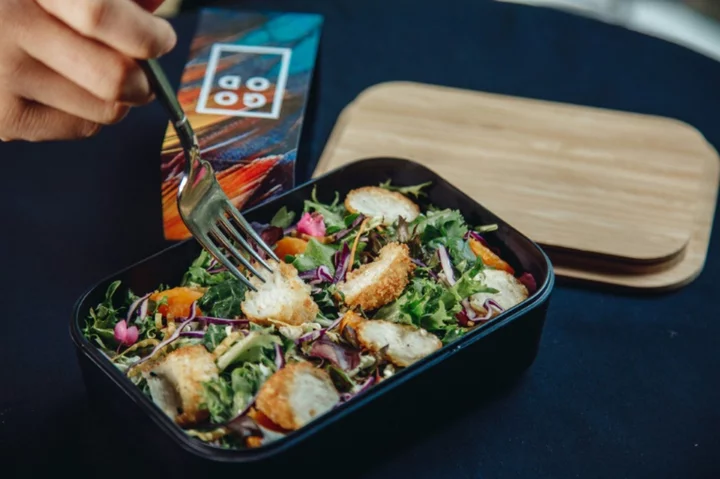
I’m standing outside my local cafe in west London, looking bedraggled as I’ve been up since 6.45am making the dreaded school packed lunch. It’s nothing exotic – margherita pizza for Lola, who is a fussy eater, and plain pasta with cheddar cheese and corn on the cob for Liberty. There were all the snacks to pack, too – sadly, no chunks of carrot, just Pom-Bears and breadsticks. I am buying a croissant to add to one of the lunch boxes when I bump into the mum of one of my daughter’s friends. “Oh darling,” she tells me, “it’s all ‘white food’. Not good.” I shrug my shoulders knowingly, then stupidly ask her what’s in her kids’ packed lunches. “Sushi bento box,” comes her instant reply. “Crudites and organic hummus. Japanese panda crackers. Seaweed crackers. Dim sum. Oh, and sandwiches cut into little shapes – I do hearts and stars.” Right. That’s a good start to my morning; I now feel totally inadequate. When it comes to my children, I am a slave to the packed lunch. But gone are the days of stuffing a hard-boiled egg, a jam sandwich or processed cheese triangles into a box – as was the case when I was a child. Even apples have been voted a prehistoric lunchbox item by 17 per cent of parents. Instead, packed lunches are now a status symbol. The actor Hilary Duff, for instance, gives her son caviar for a snack – and it’s not that unusual. One in 10 parents (9 per cent) choose sushi and, according to a recent survey by Amazon Fresh, 26 per cent of parents take a photo of their children’s packed lunch for Instagram. A third (33 per cent) have also admitted they’ve taken a sneak peek inside another child’s lunchbox – and believe me, it’s often to silently snack-shame another parent. I can’t help but wonder if food and snacks are a kind of modern litmus test of parenting. But does it really make you a better parent if you give your child home-cooked wild keta salmon and wholemeal rice in a thermal container for lunch? The playground politics of packed lunches are complex. Parents are constantly criticised for sending inappropriate lunches to school. The TV chef Jamie Oliver once said unhealthy packed lunches are tantamount to child abuse. At the other extreme, parents are finding the time to stamp cucumbers with flowers and dice dried herbs into them for their kid’s bento boxes – then post them online. There seems to be no middle ground. Christina (not her real name) is a 40-year-old PA and tablescaping specialist whose child attends a prep school in west London’s Notting Hill. She makes all of her daughter’s packed lunches from scratch, and it’s always organic produce. “I always wanted to go that extra mile,” she tells me. “My motivation to do this was never to be ‘Queen Bee mum’ – it was to make my daughter happy and proud of me.” The “presentation” and “the taste” of the packed lunches, she says, is “super important” – to such an extent that it needs to be “Instagram-worthy” and “fun” in order to encourage her daughter to eat healthily. One of her lunch box specialities, she adds, is mini American hot dogs “decorated with a little flag and a drizzle of ketchup”. “I know it is always going to be flagged by other mothers because the school is very competitive,” she continues. “This dish goes around the mums like wildfire because mums always want to outdo other mums.” If I put out a post saying how much fibre children should be having, I get people replying saying that ‘it’s unrealistic’ and ‘we can’t do that as well as everything else’ when it comes to kids’ foods. It ends up with parents pitting themselves off against one another with food Charlotte Stirling-Reed, child and baby nutrionist While school playground rivalry among parents used to be about pigtails and bows in your children’s hair, Christina says, now it’s about lunch and snacks. “Kids have a much more sophisticated palate,” she explains. “They’re exposed to a lot more than a ham and cheese sandwich. The playing field has widened, and the bar has been set higher due to social media, and Deliveroo and Uber Eats – everything has become more instantaneous.” For other parents, it’s about making a packed lunch as wholesome as possible – something my children would scoff at. Ella Mills, the founder of the plant-based food brand Deliciously Ella, tells me she has found “batch cooking” easiest for her daughter’s packed lunches at nursery. “It’s a real rush getting everyone dressed, ready and out of the door each morning,” she says. “Plus, thinking of something to cook at 7am that’s got no nuts, no sesame in it [due to possible nut allergies], that I’ll know they’ll eat, and that doesn’t take a little while to make. So I make huge batches of veggie bolognese, bean chilli or sweet potato and chickpea stews plus big batches of grains, then simply heat a portion up and pop it in a thermos. Something that’s pre-made makes a world of difference.” Other parents call in the professionals. Chef Meryem Korkut Avci of Mary’s Mobile Chef Services does “meal preps” for elite customers in west and north London. She sends over an ingredients list and will then come to your home once a week and cook for the whole family – a two-hour session is £120 for six dishes (on the seventh day, her clients usually get a takeaway). For packed lunches, she says gluten-free muffins are popular. “Also egg or chicken fried rice, chilli con carne with tortilla, little mini puff pastry rolls with cheese – or sausage rolls.” She’ll even wash up – and says clients use her because “they don’t have time” or are “bored of their own food”. Dr Megan Rossi, a gut health scientist, bestselling author and founder of the website The Gut Health Doctor and The Gut Health Clinic in London, says an ideal packed lunch would contain something from each of the super-six plant groups: “Legumes (such as chickpeas), vegetables, whole grains (such as oats and barley), fruit, nuts and seeds and herbs and spices. Hitting all these is a tricky one but for optimal health, the goal is for them to have at least one from each of these most days. It’s a great target to have in mind!” She advises “hiding legumes and whole grains in sweet treats like black bean brownies with porridge oats,” and says that “while not a long-term strategy to keep plants a secret, it can help build some confidence and comfort with those plants (as well as training childrens’ taste buds) for you to reveal when the time is right.” For chocolate lovers – like my daughter, Lola – Dr Rossi also suggests “making your own chocolate bars with dried fruits, popcorn, seeds and nuts included for extra dietary fibres and a more satiating treat”. I personally can’t see how I would fit that into my schedule. But for many parents healthy eating is a full-time job. Children may need to be offered a specific food “around 10 times” before they accept it, according to research, while Dr Rossi adds that it means nothing to a child if you merely tell them food is healthy or unhealthy. “Try explaining to them from a young age about the importance of their gut microbes,” she says. “Tell them they need to feed the little pet bugs in their tummy with broccoli, for instance, to help keep them strong.” I often feel ashamed that Lola is a fussy eater – though I find solace in the fact that her younger sister isn’t. Dr Rossi claims that what mums-to-be eat during pregnancy may also affect the kind of food your child will have a taste for. “That could play a part with fussing eating,” she says, but adds that she’s not keen on “mum guilt”: “Pregnancy is hard enough without the added pressure of nutrition.” Charlotte Sterling-Reed, “The Baby and Child Nutritionist”, runs a fussy eater course, and assures me that “parents are not bad parents if they are struggling with a fussy eater at home”. She says she is currently witnessing a backlash from “defensive parents” who are fed up with being told to live up to the “ideal” of being a perfect parent. “If I put out a post saying how much fibre children should be having, I get people replying saying that ‘it’s unrealistic’ and ‘we can’t do that as well as everything else’ when it comes to kids’ foods,” she says. “It ends up with parents pitting themselves off against one another with food.” An extravagant lunchbox is also not realistic for the majority of parents, she adds, “whether working or not, and nor should it be – there is a way to find a balance”. She says that a middle ground is possible. “As parents, [we can] pick something that is balanced but that also works for the family situation. This constant comparison between two extremes on social media makes us feel like we are failing in multiple aspects of parenting.” I don’t think I’m ever going to be posting my kids packed lunches on Instagram. I also know that sliced pepper fingers won’t get eaten even if I arrange them in the shape of a smiley face. More than anything though, I won’t feel guilty about my kids’ food habits any more, or the lengths I sometimes go to to get them to eat healthy – I once told my daughters that if they didn’t drink their freshly squeezed orange juice, their legs would fall off. And, you know what, it worked! Read More Keir Starmer is keeping his children out of the public eye – but that won’t stop them being privileged I’m a jellyfish parent – my run-in with a tiger mum was terrifying Kate Moss credits her stress-free life to ‘moonbathing’ – can eccentric wellness regimes help me too? Vasectomy and British men in their twenties: ‘Young, none and done’ Why taking a mental health day could be bad… for your mental health What the world’s happiest children tell us about where Britain is going wrong
2023-10-19 13:57
You Might Like...
I Tried A Full Face Of Beauty Pie, The Coolest Internet Club For Makeup Lovers
JLab JBuds Mini Review
Spend just $426 on this like-new Microsoft Surface Laptop 3
Imad Alarnab: In The Jungle, food restored our faith
The best pet cameras for keeping tabs on your cat or dog
Hong Kong’s Population Rises, Reversing Years of Reporting Drops
U.S. FDA Approves Over-the-Counter Designation for Vonco’s EnteraLoc™ Flow Direct-Connect Enteral Feeding Solution
People are finally learning what SPAM actually stands for