
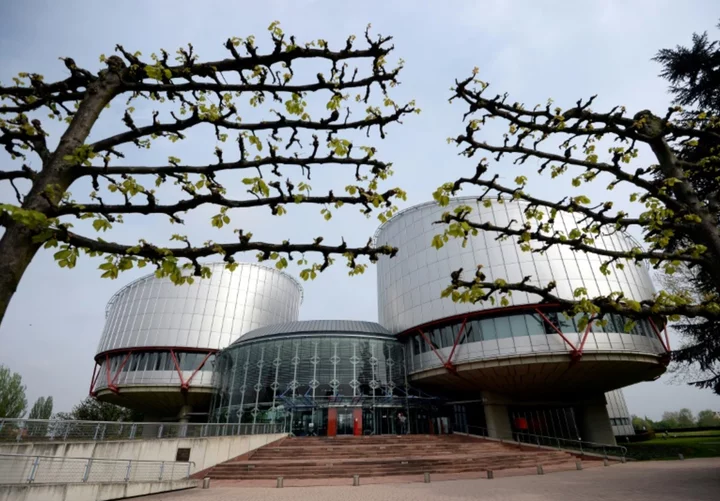
European rights court upholds French ban on posthumous procreation
The European Court of Human Rights (ECHR) on Thursday upheld France's ban on procreation using stored gametes or embryos originating from a...
2023-09-14 20:51

The 5 Best Amazon Prime Day Air Fryer Deals (Get ‘Em While They’re Hot!)
Welcome to Hype Machine, our hit-list of the top-reviewed products across the web — according to a crowd of die-hard shoppers.
2023-07-12 03:29

Minnesota governor readies to sign bill legalizing recreational cannabis
Minnesota Democratic Gov. Tim Walz is scheduled to sign a bill Tuesday that legalizes recreational marijuana for people over the age of 21
2023-05-31 00:59

What you need to know about new research into treating cervical cancer
Using existing drugs to treat cervical cancer before standard treatment could lead to a 35% reduction in the risk of relapse or death, a new study suggests. Researchers from the UCL Cancer Institute and UCLH looked into whether a short course of induction chemotherapy (IC), where a drug is used to destroy as many cancer cells as possible, before chemoradiation (CRT), could help with this. Here’s everything you need to know about the findings… What is cervical cancer? According to the NHS website, cervical cancer is a type of cancer found anywhere near the cervix – the opening between the vagina and the womb (uterus), which is also known as the neck of the womb. Most cervical cancers grow very slowly and are caused by an infection from specific types of human papillomavirus (HPV) and mostly affect women under the age of 45. According to Jo’s Cervical Cancer Trust, symptoms include vaginal bleeding that is unusual to you, changes to vaginal discharge, discomfort during sex and pain in your lower back or pelvis. Changes to cells can be spotted by a cervical screening, and then treated before they turn into cancer. There are around 3,200 new cases every year in the UK, with the five-year survival rate being around 70%, according to Cancer Research UK. CRT has been the standard treatment for cervical cancer patients since 1999, but even though there have been overall significant developments in radiation therapy techniques, up to 30% of people experience their cancer coming back. What did the research involve? Over a 10-year period, 500 patients who had been diagnosed with cervical cancer – that was large enough to see without a microscope but hadn’t spread to other parts of the body – took part in the Interlace trial at hospitals in the UK, Mexico, India, Italy and Brazil. Researchers looked into whether a short course of IC before CRT could reduce rates of relapse and death. What results were found? After five years, researchers discovered that 80% of the people who received a combination of chemotherapy and radiotherapy were alive, whilst 73% had not seen their cancer return or spread. A major benefit, according to researchers, is that it can be incorporated into standard of care treatment relatively quickly, because cheap, accessible and already-approved ingredients such as carboplatin and paclitaxel are needed for IC. “Our trial shows that this short course of additional chemotherapy delivered immediately before the standard CRT can reduce the risk of the cancer returning or death by 35%,” said Dr Mary McCormack, lead investigator of the trial from UCL Cancer Institute and UCLH. “This is the biggest improvement in outcome in this disease in over 20 years. “I’m incredibly proud of all the patients who participated in the trial; their contribution has allowed us to gather the evidence needed to improve treatment of cervical cancer patients everywhere. “We couldn’t have done this without the generous support of Cancer Research UK.” Why is the research important? Dr Iain Foulkes, executive director of research and innovation at Cancer Research UK, said: “Timing is everything when you’re treating cancer. The simple act of adding induction chemotherapy to the start of chemoradiation treatment for cervical cancer has delivered remarkable results in this trial. “A growing body of evidence is showing the value of additional rounds of chemotherapy before other treatments like surgery and radiotherapy in several other cancers. “Not only can it reduce the chances of cancer coming back, it can be delivered quickly using drugs already available worldwide. “We’re excited for the improvements this trial could bring to cervical cancer treatment and hope short courses of induction chemotherapy will be rapidly adopted in the clinic.”
2023-10-23 20:22

Your Horoscope This Week: July 16 to July 22, 2023
It’s time for spiritual restoration and creative expansion. As we round out Cancer season, we’re welcoming a much-needed change of pace. Mars, the planet of action, began a six-week transit in Virgo last week, and Mercury is continuing its two-week transit through the sign of Leo. This Earth-Fire combo sparks a blend of intellect and action in our minds and in our lives. The highlight of this week is the Cancer new moon occurring at 2:32 p.m. EST on July 17. This occurs on the same day that the lunar nodes switch out of the Taurus-Scorpio axis and enter the Libra-Aries axis. The next year and a half will feel karmically lighter and more expansive as a result of this shift, and all zodiac signs would benefit from focusing on living in the moment rather than trying to project themselves into the future. Venus begins its six-week retrograde in Leo on July 22 at 9:33 p.m. EST, signaling a time for introspection and reexamination of one’s core values. Less than twenty minutes later, the Sun enters Leo for the next four weeks. This Leo season will have a cosmic twist to it due to the energy of Venus retrograde asking us to be boldly honest with ourselves and learn from our past. What need for social approval can you do your best to release at this time? This week encourages us to direct our attention to intimately approving of our own selves, right here, right now, without seeking external validation. Validate yourself instead.
2023-07-16 19:29

Art on war footing displayed at new show in Moscow
Ukraine, 2023. Russian soldiers pose with their Kalashnikovs faced with a...
2023-05-26 14:56
Music Companies Sue Twitter for Alleged Copyright Violations
The National Music Publishers’ Association sued Twitter Inc. Wednesday, alleging it violates the copyright of songwriters by using
2023-06-15 03:46
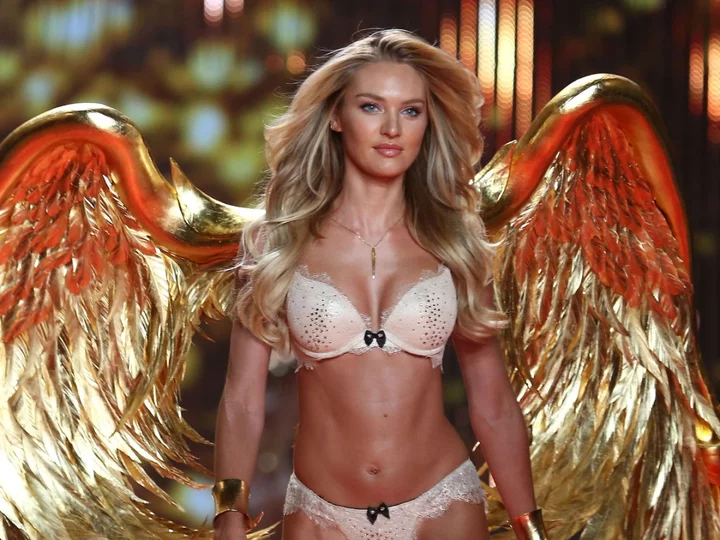
Victoria’s Secret was never feminist – why are they bothering to try now?
Wings! Fake tans! Low body mass indexes! For millennial women, the Victoria’s Secret Fashion Show was an annual reminder of the myriad ways in which we were failing to adhere to exacting and exhausting beauty standards. When it was cancelled in 2019, few mourned it. But fashion loves a comeback story, and today the company unveiled Victoria’s Secret: The Tour ’23 on Amazon Prime Video, its first televised catwalk event in five years. According to the company, the feature-length film is the “ultimate expression” of their ongoing efforts to rehabilitate a brand that has been mired in scandal. Alongside long-standing criticisms over promoting an unrealistic body image, the company’s former marketing executive Ed Razek was also accused of behaving inappropriately with models in a New York Times report (he described the allegations as “categorically untrue, misconstrued or taken out of context”) and a recent Hulu documentary Angels and Demons explored troubling links with convicted sex offender Jeffrey Epstein. “Visually, strategically, everything about it is the incarnation of where the brand is going,” Victoria’s Secret president Greg Unis has said. Instead of the usual structure, which was centred around a straightforward runway show, The Tour ’23 is roughly divided into quarters, each focusing on one of four locations: Lagos, Nigeria; Bogota, Colombia; Tokyo, Japan; London, the UK. In each city, a local designer has dreamed up their own fashion collection to be modelled by the likes of Naomi Campbell, Emily Ratajkowski, Adut Akech, and Gigi Hadid, who does double duty as the show’s narrator. In London, the chosen designer is Michaela Stark, whose corsets aim to celebrate a diverse range of body shapes, rather than constrict them. She agreed to take part in the VS show 2.0, she suggests, so that she could counteract the damaging messages put out by the original runways. “It was a big thing” when she was a teenager, she recalls, “but it was also that culture around it, of not wanting to eat after you saw it”. Her comments inadvertently raise a question that looms over the whole production: can you ever truly detoxify a brand practically built on the insecurities of a generation of women? Founded by Roy Raymond in the late Seventies, who felt awkward buying lingerie for his wife in his local department store, Victoria’s Secret began life as a women’s underwear shop aimed specifically at men. In 1982, Raymond sold the business to Limited Stores founder Les Wexner for $1m; Wexner went on to transform the brand, envisaging it as a more affordable version of the fancy European label La Perla. In 1995, when the company was facing competition from Wonderbra, the first Victoria’s Secret Fashion Show took place at the Plaza Hotel in New York City. It proved successful enough to become an annual event. In 1999, the show was streamed on the internet for the first time, prompting the website to crash as 1.5 million users tried to tune in. Two years later, the VS show celebrated its inaugural TV broadcast, during which the National Organisation for Women (NOW) protested outside a New York branch of the shop. “Some people are terribly blase about this, that this is not a big deal, that we ought to be used to this kind of daily sexuality,” Sonia Ossorio, NOW’s vice president for public information, said at the time. “But I think we need to keep questioning the ever-extending sexualisation of women in mass media.” The following year, NOW branded the event a “softcore porn infomercial”. By then, the blueprint for future VS shows had been set. A lineup of models would don bras encrusted with millions of pounds worth of jewels and embarrassingly themed lingerie (never forget Cara Delevingne’s god-awful outfit circa 2013: a sort of miniature shell suit likely pitched in the boardroom as “sexy football fan”). Somewhere between the models, a famous singer would pop in for a brief performance; if they were a woman, they’d be decked out in a VS creation of their own (Taylor Swift got a particularly raw deal in 2013, too, when she had to wear a Union Jack-inspired number, complete with a tiny red, white and blue top hat). This glittering, over-the-top spectacle, much closer to a beauty pageant than a Fashion Week presentation, spotlighted the world’s most beautiful women – who were not just genetically blessed but worked hard, too, we were told ad nauseam. They had been preparing for the show like endurance athletes, sticking to carefully tailored diets and intense workout schedules. These wing-wearing “Angels” were selling a dream, one that we lesser mortals could supposedly buy into by picking up some synthetic underwear at our nearest Victoria’s Secret branch. But it was their painstaking fitness regimens, not the pants they were wearing, that were the real focus of fascination. In endless interviews, the models were asked to detail exactly how they whittled themselves down to “Victoria’s Secret ready” size – so that we could try and copy them. To combat the criticisms of objectification, the brand relied on its models to pay lip service to just how “empowering” the whole circus was, offering up their take on choice feminism. “There’s something really powerful about a woman who owns her sexuality and is in charge” – model Karlie Kloss was peddling this line to the media as late as 2018. “A show like this celebrates that and allows all of us to be the best versions of ourselves. Whether it’s wearing heels, make-up or a beautiful piece of lingerie – if you are in control and empowered by yourself, it’s sexy.” Naturally, it was very convenient that this “best version of ourselves” aligned with the oppressively narrow conventional standard of sexiness Victoria’s Secret was selling. By the late 2010s, though, as the fashion industry began to (slowly) address its diversity problem, Victoria’s Secret started to seem more and more like an anachronism. As other brands took small steps to spotlight plus-size models on their catwalks and in their advertising campaigns, the VS show remained the preserve of the extremely thin. They had been preparing for the show like endurance athletes, sticking to carefully tailored diets and intense workout schedules Placing white models in culturally insensitive outfits (see: Kloss walking down the runway wearing a Native American-inspired headdress) only added to the glaring PR problem, which was later exacerbated when the brand’s marketing boss Ed Razek made controversial comments about transgender people and plus-size models to Vogue in 2018. “It’s like, why doesn’t your show do this? Shouldn’t you have transsexuals in your show?” he said, apparently recalling questions from critics. “No. No, I don’t think we should. Well, why not? Because the show is a fantasy.” Elsewhere, he claimed “no one had any interest” in seeing bigger bodies on the VS catwalk. Razek later apologised, admitting that his “remark regarding the inclusion of transgender models in the Victoria’s Secret Fashion Show came across as insensitive”. His comments about plus-size bodies went unaddressed. In 2019, against a backdrop of plummeting TV ratings and declining sales, the brand confirmed that the VS show had been cancelled; instead, they said, the company would focus on “evolving” their marketing. The news came just a few months after the revelation that Jeffrey Epstein had provided financial advice to Victoria’s Secret founder Wexner – and had exploited his personal connection to the brand as a means to lure in young women. “Being taken advantage of by someone who was so sick, so cunning, so depraved, is something that I’m embarrassed I was even close to,” Wexner said to investors. “But that is in the past.” He left the company the following year. Since then, Victoria’s Secret has made some high-profile attempts to rectify past missteps. The company brought in a majority female board of directors; they ditched the “Angels” concept in favour of the new “VS Collective” whose ranks include actor Priyanka Chopra, US football star Megan Rapinoe, and plus-size model Paloma Elsesser. Last year, an ad campaign featuring a more diverse array of women was accompanied by the slogan “we’ve changed” – supposedly into something “ever-evolving” and “real”. How much has Victoria’s Secret “changed”, really? The latest show features a handful of plus-size models, Elsesser included, but many of the old VS cohort are present and correct, including Candice Swanepoel, Lily Aldridge, and Adriana Lima. The nods to body diversity can’t help but feel a bit cursory when the overriding vision is still one of impossibly thin women parading up and down a runway – albeit a runway that now snakes around a Brutalist building in Barcelona as opposed to a swanky New York City hotel. The outfits too, are more arty, less skimpy this time around and mercifully there hasn’t been the usual media battery of stories on extreme exercise and diet in the run-up – but that doesn’t mean those practices have ended altogether. “We haven’t forgotten our past, but we’re also speaking to the present,” the brand’s chief creative director Raul Martinez said before the film’s launch. In an era when more inclusive, dynamic lingerie labels, like Rihanna’s Savage x Fenty, reign supreme, the VS show can’t help but seem like a relic. And as long as its legacy of impossible body standards lives on for many of us, any attempts to dress the spectacle up as empowering feel very hollow indeed. Read More Naomi Campbell and Gigi Hadid lead first Victoria’s Secret runway show in five years Victoria's Secret overhauls its racy fashion catwalk in its latest moves to be more inclusive Chioma Nnadi at Vogue: All hail the era of the Black female fashion editor Naomi Campbell and Gigi Hadid lead first Victoria’s Secret runway show in five years Kim Kardashian debuts buzz cut and thin eyebrows for new photo shoot Travis Kelce wears ‘1989’ inspired outfit after leaving NFL game with Taylor Swift
2023-09-27 13:45
Twitter walks back some login requirements
It seems that Twitter is already walking back some of the unpopular decisions it made
2023-07-06 05:27
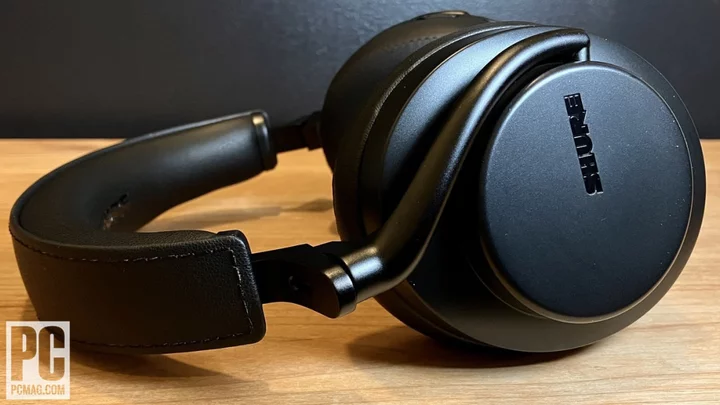
Shure Aonic 50 Gen 2 Review
Much like their pricier predecessors, the $349.99 Shure Aonic 50 Gen 2 noise-cancelling headphones sport
2023-11-30 02:46

JetBlue Joins United in Shifting Blame to FAA for Flight Delays
JetBlue Airways Corp. is raising questions about US air traffic control actions, joining United Airlines Holdings Inc. in
2023-06-30 05:50
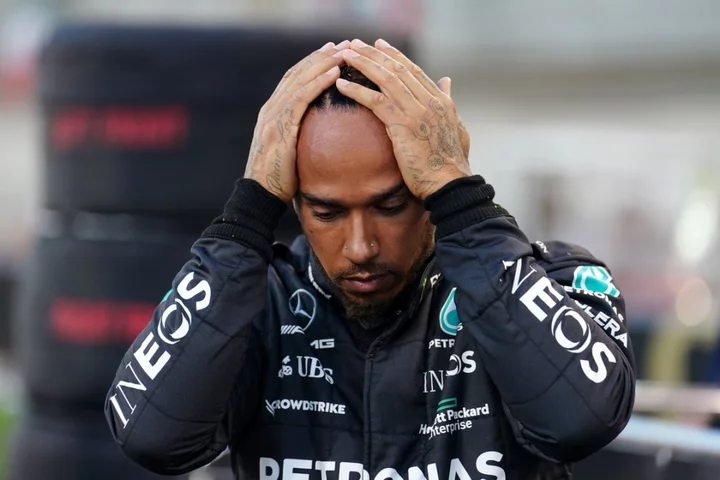
Lewis Hamilton and Mercedes are the biggest losers from Imola Grand Prix cancellation
They’ve been talking about it for weeks. In fact since the season-opening Bahrain Grand Prix at the beginning of March, Mercedes have pinpointed this weekend in Imola as a new beginning not only this season, but in this new phase of ground-effect regulations first brought in last year. Toto Wolff has made no secret of F1’s return to traditional European circuits as marking a line in the sand for his team’s prospects in 2023, with Lewis Hamilton and George Russell waiting eagerly in the cockpit to see how far they can reduce the hefty gap – 128 points in the constructors’ standings – to Red Bull out in front. News on Wednesday then of the cancellation of this weekend’s Emilia Romagna Grand Prix comes as a bitter blow to their development plans. In the wider scheme of things, though, Mercedes’ fortunes are very much not a priority. The swiftness of those at Formula 1 on the ground in Imola has not gone unnoticed in the past few days. F1 made the right call to cancel given the severe flooding in the region, even if as expected the race cannot be rescheduled this year. For a sporting entity and a governing body, the FIA, who have repeatedly blundered in recent months, this time the communication between executives, teams and the media was clear throughout in an ever-changing situation. As opposed to Australia in 2020 amid the coronavirus outbreak, as well as Spa in 2021 with heavy rain eventually rendering racing redundant, the call here was decisive while matters of far more importance to local bodies in northern Italy, not least the emergency services, take greater hold. However, given the sheer anticipation at Mercedes for an upgrade package which was set to include a trio of new sidepods, floor and front suspension, this delay is far from ideal. As recently as the weekend, engineering director Andrew Shovlin said: “We took some decisions on how we develop the car – how the car works aerodynamically, how we shape the characteristics of the car, how it is in terms of handling. "What we are going to be bringing to the track in Imola is the first step of that work. This takes quite a long time to develop in the wind tunnel, you can’t just do these things overnight. But the Imola package is the first step in that direction.” At Imola, with three practice sessions, qualifying and a 63-lap race on a traditional European circuit with 19 turns – even if rain was forecast – the technicians and engineers at Mercedes would have gathered swathes of useful data regarding the W14’s performance, consistency and raw speed. An immediate evaluation would have been collated: have the upgrades made the car quicker? But it is no longer the Imola package. Rather unsatisfactorily, it is now the Monaco package. Out of all 23 race circuits on the 2023 schedule, the twisty turns of the principality are perhaps the last place upgrades would want to be tested first time out. The unique dimensions of the Monaco street circuit are out of quilter with the vast majority of tracks on the calendar, meaning upgrades designed to improve the quality of the car over the course of a season may not have a positive impact in Monaco. Thankfully, the race that follows is in Barcelona – a track which before the pandemic was traditionally used for testing. A more appropriate analysis can be ascertained during that weekend in Spain. While Ferrari were also expected to bring improvements this weekend, the focus was undeniably on the Mercedes garage. Now, that anticipation and development plan will have to be re-routed. Hamilton stated after the Azerbaijan Grand Prix in April that he was “counting down the days” until the anticipated upgrades at Imola: the scene of his ultimate humiliation when he was lapped by old foe Max Verstappen in last year’s race. Unfortunately for the seven-time world champion, he will have to wait that little bit longer. Read More F1 Imola Grand Prix cancelled F1 Grand Prix – live: Lewis Hamilton reacts after Imola race cancelled Will Imola Grand Prix be rescheduled? Where are Mercedes and Ferrari? Frankly, you don’t want to hear the answer ‘Nasty piece of work’: Lewis Hamilton’s Mercedes slammed by Toto Wolff Lewis Hamilton would be taking gamble by leaving Mercedes, says former rival
2023-05-17 23:20
You Might Like...
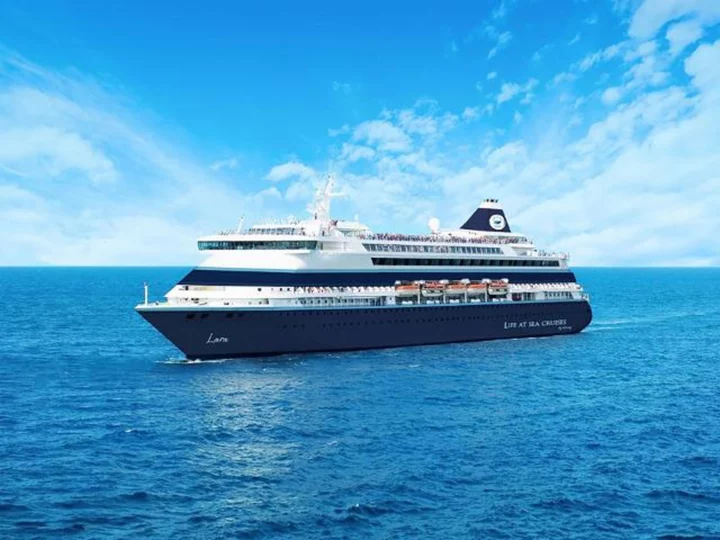
The three-year cruise is canceled

We’re Reclaiming The Romantic Y2K Flower Choker Trend

Score a refurbished MacBook Pro for under $270
How to watch JioCinema online for free
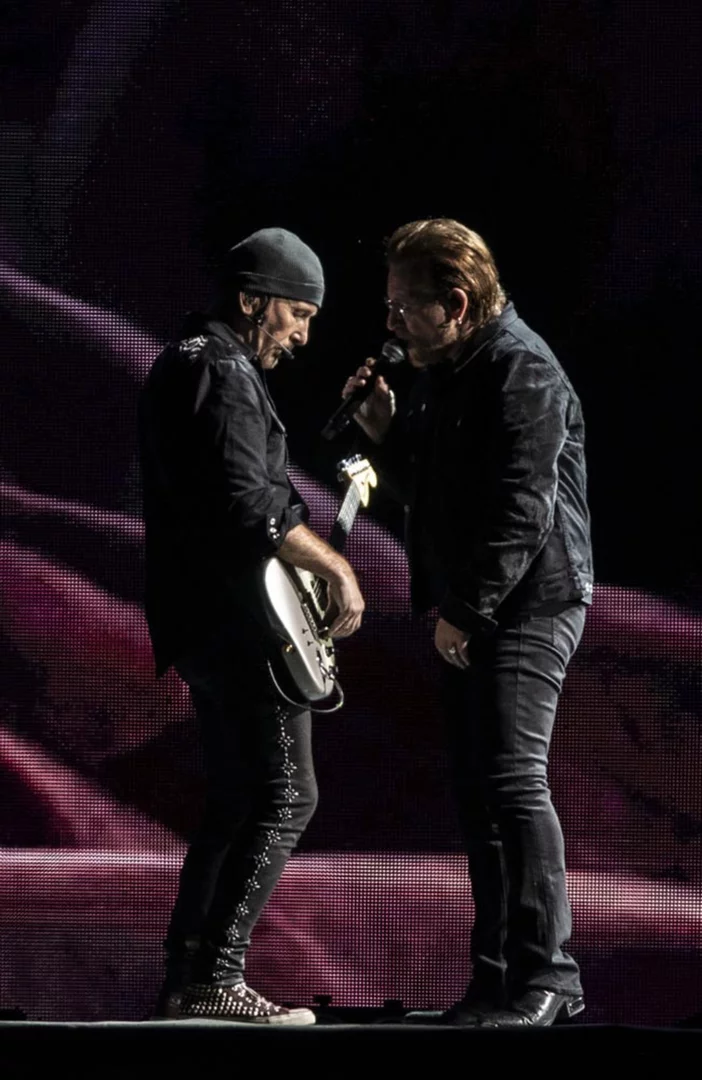
With or Without Poppadoms: U2's Bono and The Edge went incognito while sitting down for a budget curry at a popular chain
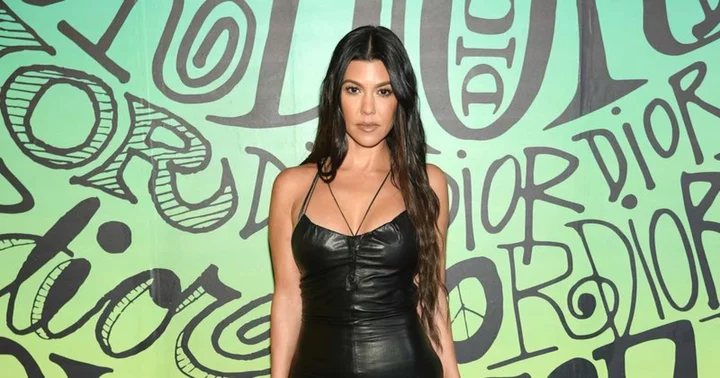
‘It’s a misunderstanding’: Kourtney Kardashian debunks myths about frozen eggs, reveals her previous ones ‘didn't survive’

Helmut Lang and Ralph Lauren kick off New York Fashion Week

This $39 AI résumé builder may help you land a job