
Be The In-Office “It Girl” With Little Liffner’s Leather Totes — & They’re R29-Exclusive Sale
Super Sale Alert: Get 20% off sitewide at Little Liffner using our promo code REFINERY20, now through September 3.
2023-08-28 23:18
Apple will no longer repair the $17,000 gold Apple Watch
Remember Apple's gold Watch Edition, which launched in 2015 with a price tag of $10,000
2023-10-03 17:52
Upgraded Launches MacBook Upgrade Program & Subscription Payment Service in the U.S.
SAN FRANCISCO--(BUSINESS WIRE)--Aug 17, 2023--
2023-08-17 21:20
Why do we get hay fever and what are the symptoms?
A runny nose, watery eyes, sneezing, coughing – whatever your hay fever symptoms, it’s no surprise if you’ve had a flare-up recently. During spring, both tree and grass pollen is released into the air. If you’re allergic to the proteins they contain, your nose, eyes, throat and sinuses can become swollen, irritated and inflamed. “Many people are suffering from hay fever just now because the pollen count is high, thanks in part to climate change,” says Dr Nisa Aslam, GP from Typharm’s Skin Life Sciences Foundation. “Plus the pollen season is getting longer.” The immune function plays an important role in an allergic reactions, she explains. “People who suffer from hay fever often have a family history of not just hay fever, but also skin conditions such as eczema or psoriasis, which can often be borne out of problems with the immune system.” The weather can also be a contributing factor in how badly you’re affected. “Some hay fever sufferers may be experiencing a sudden spike in their symptoms a bit earlier than usual, this may be due to the recent prolonged wet and windy weather,” says Claire Nevinson, superintendent pharmacist at Boots. “On a daily basis, rainfall tends to decrease pollen, but over a period of months, intermittent wet days tend to produce a more severe hay fever season overall.” Conditions could be about to get even worse. A recent study by the University of Worcester, published in the Science of The Total Environment journal, warned that it could be one of the worst seasons for birch pollen on record. The severity is due to two things. “Firstly, higher than average temperatures last June, when the pollen is produced, allowed greater potential for high pollen levels,” says Dr Beverley Adams-Groom, senior pollen forecaster at the university. “Secondly, birch trees have a biennial pattern of pollen production, one mild year and one severe year, and this year was already expected to be a high year.” So what can you do if your hay fever is much worse than usual at the moment? The first step is to avoid exposure to the pollen that affects you the most. “Allergens responsible for hay fever include grass pollens and tree pollens [spring and summer], weed pollens and fungal mould spores,” says Dr Aslam. “Watch the daily pollen forecasts. Don’t go outside when the pollen count is high and keep all windows shut.” Preventive medicines can help to reduce symptoms if you know in advance when you’re going to be exposed to pollen. “This can be a steroid nasal spray one to two weeks before symptoms start,” says Dr Aslam. Alternatively, natural nasal sprays “can help to prevent the symptoms of hayfever and other types of allergic rhinitis by forming a protective film in our inner nose, stopping allergens that we breathe in from trying to enter our respiratory system”, she says. Similarly, ointments like Vaseline can act as a pollen trap. “Apply a barrier balm of petroleum jelly around your nose to trap the pollen and help relieve dry and uncomfortable skin from repetitive nose blowing,” Ms Nevinson says. “Shower and change your clothes after you have been outside to wash pollen off and wear wraparound sunglasses to stop pollen getting into your eyes.” Read More Seasonal allergies tips and tricks as pollen count rises What is the link between pollen and eye infections? Hay fever may be mistaken for Covid, warns expert Why do heatwaves in the UK feel hotter than abroad? The startling and grim discoveries unearthed by the climate crisis Earth’s CO2 hits highest recorded level in human history
2023-05-20 01:49
'Succession' star James Cromwell tweeted something important about Logan's eulogy
Succession star James Cromwell, who plays Logan's brother Ewan, has only been in one episode
2023-05-23 17:53
Get Rosetta Stone and Microsoft Office for Life With This $200 Bundle
Learning a new language is great for your productivity, as is having Microsoft Office on
2023-09-26 22:45
Italy's clam farmers fear blue crab 'invasion'
In the shallow waters of the Scardovari lagoon, fishermen catch clams for Italy's beloved spaghetti alle vongole, alongside mussels and oysters. But an invader risks...
2023-08-15 13:47
The chef who hated food as a child
Jeremy Pang doesn’t have a classic chef origin story: he “hated” food as a child. Before he turned 10, the chef, teacher and owner of the School of Wok in London admits: “I hated eating – I honestly did not like food. “Up to the age of, like, nine, it would take my mum two, three hours to get my dinner down me. I just didn’t want to eat – I wanted to go out and play football with my mates. I wanted to go and do stuff and play – I also wanted to eat fish fingers and all the stuff my friends were eating at home.” Pang grew up in a Chinese household and is a third-generation chef. When he was 10 years old, his family moved from the UK to Singapore for two years. Now aged 39 and based in southwest London, Pang says upon making the move, his “life completely changed”. He says: “When you go into hawker centres [open-air food markets] in Singapore, it’s a different world. Every single stall is a specialist in one type of food – not even cuisine. So you might have one uncle who has cooked chicken rice for his whole life, or another person who has cooked Hokkien Mee [a stir-fried noodle dish] for 40 years. “When people are as specialist as that, you cannot not want to eat it. And you see everyone digging into their food with no real etiquette – but the etiquette is the enjoyment of that bowl of food.” From there, Pang says Singapore “opened mine and my sister’s horizons” and he fell in love with food. With Singapore’s proximity to other Southeast Asian countries, he was exposed to a variety of cuisines – from Indonesian to Malaysian – many of which are taught at the School of Wok, along with the Chinese food Pang grew up with. With two kids of his own, aged six and two, Pang says: “I now feel so sorry for my mum.” Before the Covid-19 pandemic, the chef says of his oldest: “It was really difficult to get him to enjoy anything that wasn’t raw carrot or cucumber – which actually is healthy at least, but every day? That’s hard.” The pandemic shifted his son’s eating habits. Pang took a couple of months off and “cooked with him – we started making homemade pizzas, flapjacks – anything he wanted to make. He definitely at that point thought he had more of a Western palate, but I’ve known since he was really young and started eating that he does love Chinese food. “He likes the slightly lighter palate, and home-cooked Chinese food can be quite light – steamed fish, flash-fried vegetables, things like that.” One constant from Pang’s childhood to his family life now is the concept of feasting – serving multiple dishes for one meal. “This is how Asian cuisine is eaten, and should be eaten,” he says simply. “My style of cooking is 100 per cent home cooking anyway, and I’ve grown up with it. If you are Asian, that’s just a way of life. But if you’re not, it’s hard to compute how to get four or five dishes on the table, all hot or in the right state at the right time.” He continues: “Even if when we’re doing midweek meals at home, if I’m cooking Chinese or Southeast Asian just for the four of us, I’ll quite often cook two or three dishes. Those two or three dishes are there to be shared – that absolutely is our way of cooking and eating.” Pang’s latest book, Simple Family Feasts, is all about demystifying this concept for home cooks who haven’t grown up with it. Each chapter is dedicated to a different cuisine – including Chinese, Vietnamese, Singaporean and Indonesian – and shows you how to build a feast, guiding you through which dishes to make and in what order. Balance is crucial to pulling off a feast. “If, for example, you just ate crispy, deep-fried stuff – which is terribly bad for you, but we all love it – yes, you want to eat lots of it at the beginning. But five minutes later, you might get lost in that deep fried, crispy, greasy world, and so you’re likely to stop eating it at some point quite quickly. “But if you had something crispy, you have something opposite that melts in the mouth, you had something soft with a gentle bite, you had crunchy – usually from fresh vegetables or flash-fried vegetables, salads, anything like that – and you had a perfect balance of those textures. Honestly, I think you could just keep eating.” Growing up with this style of cooking must make Pang a brilliant multitasker – something he says is “a great skill to have”, but “sometimes it’s my worst enemy”. “I’m constantly multitasking – I get to the end of the day and I don’t know what’s happened, I sometimes can’t tell you what I’ve done in a day. I might have done a million different things… So in some ways, I’m very good at multitasking – but when I get home, my wife probably wouldn’t agree with that.” Like all of Pang’s cookbooks, this is an “ode to my father”, who passed away in 2009. “He’s the one who instilled that love of cooking and cuisine – especially Asian food. He never really taught me how to cook, he just said, ‘Stand and watch’, or, ‘Taste this and tell me what’s in it’. That was his style of teaching.” ‘Jeremy Pang’s School Of Wok: Simple Family Feasts’ (published by Hamlyn; £22). Read More Marina O’Loughlin is wrong – there’s joy in solo dining Budget Bites: Three recipes to keep food bills down before pay day Meal plan: Romesco chicken and other recipes to fall in love with Who knew a simple flan could be so well-travelled? Midweek comfort food: Singaporean curry sauce and rice How to make Thai favourite lemongrass chicken stir-fry
2023-08-09 13:46
US FDA approves French drugmaker Ipsen's rare bone disorder drug
By Bhanvi Satija and Sriparna Roy (Reuters) -The U.S. Food and Drug Administration (FDA) on Wednesday approved French drugmaker Ipsen's
2023-08-17 06:56
Support with mental health issues and finances should be linked – Martin Lewis
People receiving support for their mental health should be able to “walk down the corridor” and get money advice too, consumer champion Martin Lewis has urged. The MoneySavingExpert.com founder said swift action is needed to ensure people struggling with their mental health and finances receive the support they need. He made the call as the Money and Mental Health Policy Institute said there is an urgent need for more joined-up mental health and debt support. Mr Lewis, who is also founder and chair of the institute, said: “The cost-of-living crisis shows no sign of abating, and even if it does the fallout will last years. “Financial problems and mental health issues are locked together, it’s about time treatments were linked too. “We’d urge the Government and NHS to take swift action to ensure those struggling with their mental health and finances get the support they need – and cut costs for the state at the same time.” The institute argued that the reforms could save money for the public purse, by reducing demand on health services and helping more people with mental health problems to move into employment. It commissioned YouGov to survey more than 2,000 people across the UK in June about their experiences of money and mental health during the cost-of-living crisis. Nearly one in five (19%) people with mental health problems in the past two years are behind with one key bill, the survey indicated. This is around three times the 6% of people who have never experienced mental health problems who said they are behind with at least one major bill. Six in 10 (60%) people with recent mental health problems said they have felt unable to cope due to rising costs, yet only 9% have received money or debt advice since the start of the cost-of-living crisis, the survey found. The charity is calling for the Government and NHS England to provide money advice alongside NHS talking therapies – an initiative which can help people with common mental health problems. This isn't about big changes, it's a case of ensuring that when someone goes for support for their mental health, they can walk down the corridor and get money advice too Martin Lewis The charity said everyone receiving support from NHS talking therapies should be asked about their financial situation when they are initially assessed for the programme and money advice services should be located on the same site as talking therapies services. Co-locating both support services could make money advice much more accessible for people who are struggling with everyday tasks due to their mental health, it argued. Where co-location is not possible, or where people prefer telephone or online advice, professionals working in talking therapies services should actively book appointments on behalf of people, the institute said. Mr Lewis added: “For many years, therapists, mental health nurses and social workers have told us they often spend substantial, valuable clinical time helping people with their finances. It makes more sense to leave debt help professionals to do that and take some pressure off the NHS, letting clinicians focus on helping people get better. “This isn’t about big changes, it’s a case of ensuring that when someone goes for support for their mental health, they can walk down the corridor and get money advice too. Or if they’d prefer to get money advice online or via telephone, removing the stress of having to book appointments. That would make a huge difference in helping people to deal with mental health and debt issues, and to get on with their lives. “And when you throw in the potential economic gains of helping more people with mental health problems back into work, these reforms are a no-brainer.” A Government spokesperson said: “Our network of employment advisers provide money guidance to clients with depression and anxiety already receiving treatment from NHS talking therapies services. We’re working with the Money and Pensions Service to integrate further signposted sources of financial advice. “We’re investing £2.3 billion of extra funding a year by March 2024 to expand and transform mental health services in England, to treat an additional two million patients. We’ve also helped nearly two million people out of absolute poverty since 2010, and provided a £94 billion support package – worth around £3,300 per household – to help those most in need.” Read More Charity boss speaks out over ‘traumatic’ encounter with royal aide Ukraine war’s heaviest fight rages in east - follow live Why does my washing machine smell so bad? Self Esteem: The journey of self-belief is never over Holiday childcare costs up with fewer places available, survey finds
2023-07-18 19:22
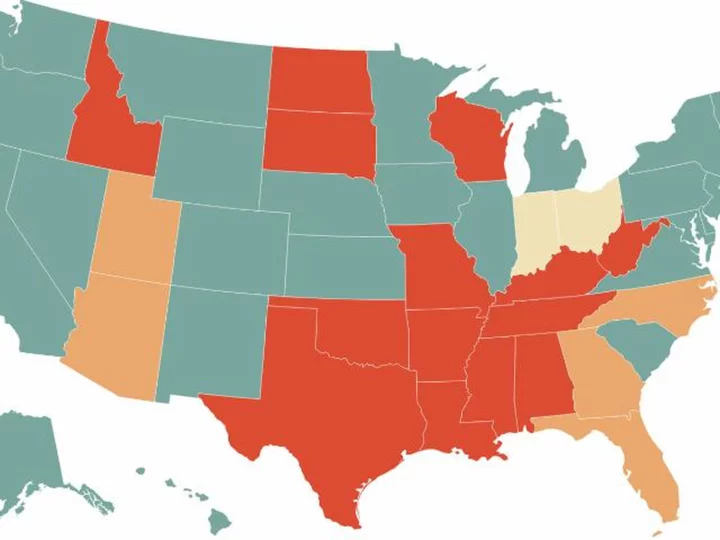
South Carolina to become latest US state to restrict abortion
The South Carolina Senate voted on Tuesday to ban abortion after six weeks of pregnancy, despite an attempt to block the bill by the legislative body's...
2023-05-24 11:17
Cierto Tequila Wins Best Extra Añejo and Two Double Golds at the Los Angeles Invitational Spirits Challenge
LOS ANGELES--(BUSINESS WIRE)--Jun 1, 2023--
2023-06-02 07:26
You Might Like...
Young Chinese opt out of the rat race and pressures at home to pursue global nomad lifestyle
Chris Pine's villain song from Disney's 'Wish' has dropped
Bitcoin Coders Feud Over Whether to Crush $1 Billion Frenzy for Memecoins
Joel Dahmen gives golf fan $100 to buy beers after hitting him with errant ball at PGA Championship
Senegalese go wild for prized 'maad' fruit
Toto Wolff and Fred Vasseur face punishment over ‘swearing’ in Las Vegas
Mercedes chief admits ‘embarrassment’ after Lewis Hamilton disqualification
O’Charley’s Announces “Tackle Some Tenders” Dine-In and Take-Out Promotions for College Football Season