
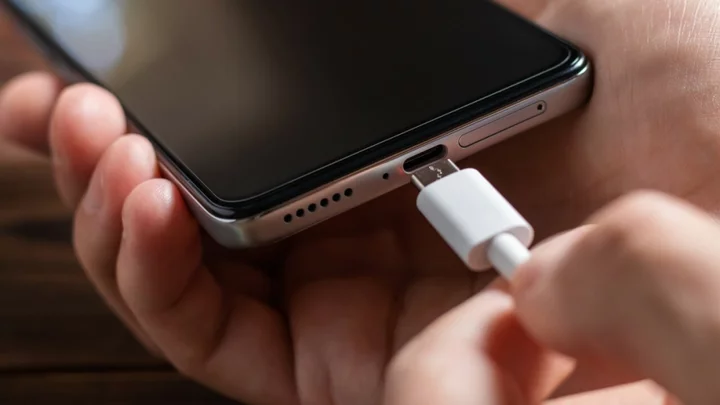
How Long Will It Take to Charge Your iPhone? Use This Shortcut to Find Out
Despite the fact that Apple no longer ships its smartphones with power adapters, charging your
2023-08-16 04:58

AP PHOTOS: Hong Kong's colorful Bun Festival returns after COVID-19 cancellations
HONG KONG (AP) — Hong Kong's colorful Bun Festival is back after three years of COVID-19 restrictions.
2023-05-27 16:58
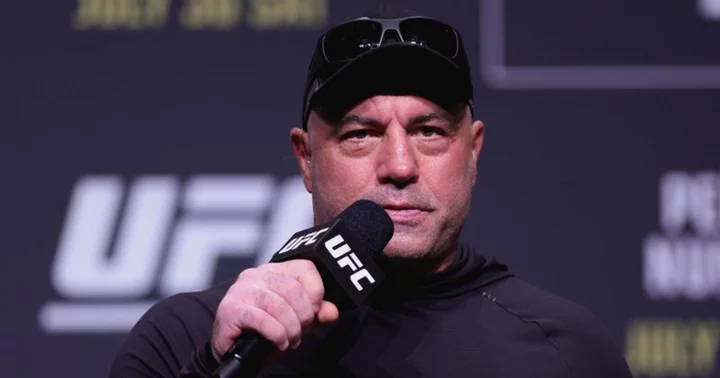
Joe Rogan makes astonishing revelations about his unorthodox parenting style: 'People don’t like this, but I’m going to say it'
Joe Rogan said, 'I like to be high around my children because when I’m around my children I’m fascinated by them'
2023-07-02 17:59

26 Matching Sweatsuit Sets Worth Living In
Fashion trends may come and go, but certain outfit phenomenons (the beloved nap dress, for instance) have proven just too cute and comfortable to leave behind. There's one, in particular, that I’ll remain grateful for: the matching sweatsuit set.
2023-08-19 04:51
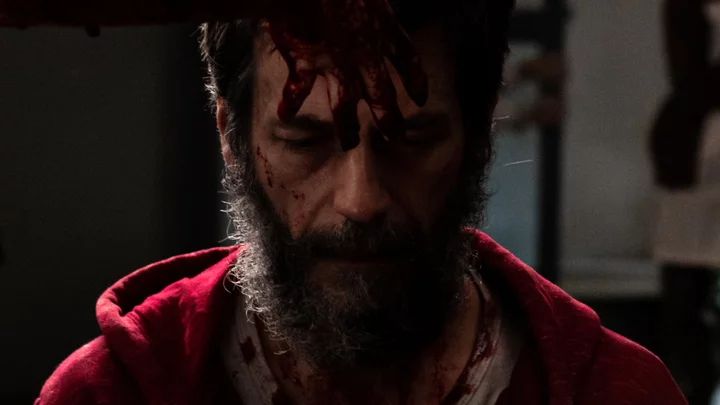
'When Evil Lurks' disturbing ending, explained
When Evil Lurks is such an impressively grim movie that it's bound to stick in
2023-10-27 17:54
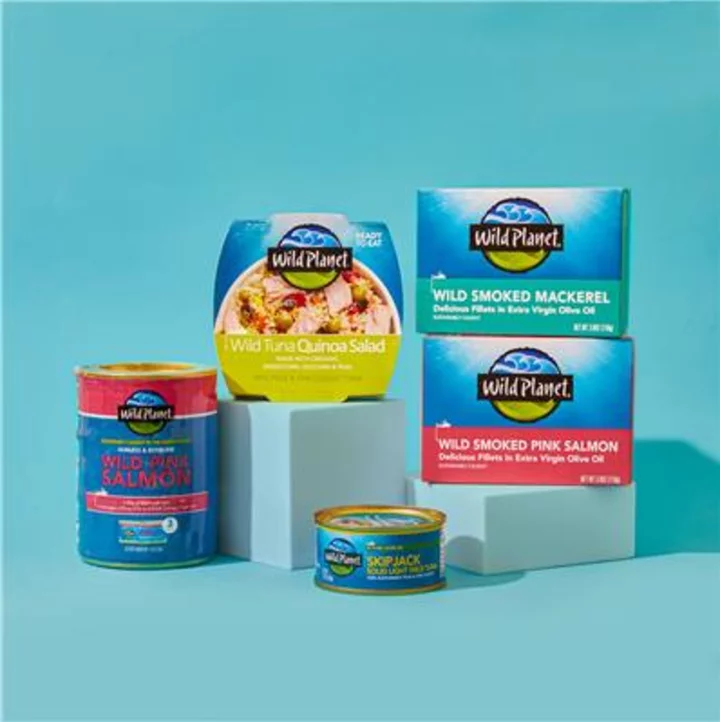
Wild Planet Foods Launches Five New Sustainably Caught Seafood Items in Whole Foods Market Stores Nationwide
MCKINLEYVILLE, Calif.--(BUSINESS WIRE)--Jul 18, 2023--
2023-07-18 21:23

Vuitton transforms Paris with a playful spectacle of color, stars and history
Louis Vuitton dazzled Paris as the latest collection from women's creative director Nicolas Ghesquière swirled epochs and emotions
2023-10-03 00:58

F1 icon Willy T. Ribbs: ‘There were death threats – but I was never going to play the victim’
As often was the case amid an American society embedded in racism in the 1980s, Muhammed Ali put it best. Advising black racing driver Willy T. Ribbs, the people’s champion made his point in no uncertain terms: “There are Blacks in my sport. But there are no Blacks in your sport. “They’re going to want to kill you.” Yet for all the death threats, discrimination and abuse, Ribbs had long decided that the only option was to meet the uphill battle head-on. He made history in 1986 when he became the first Black driver to test an F1 car. Five years later, he was the first to race in the Indy 500, one of the world’s most famous events. But on the course to that journey, Ribbs faced it all. Don’t let me tell you though; let the man himself. “Of course, there were death threats, the n-word,” he reflects, in a slow but dead-pan fashion that tells you the wounds have long since healed. Instead, the metaphorical bruises are worn with pride. “But I enjoyed it. It didn’t make me mad, it was fun. I was going to dish out what they were dishing out to me, it never scared or intimidated me. I actually enjoyed it because it was motivating. I was never going to play the victim, that was not Willy T. Ribbs.” Now 68, Ribbs is an ambassador for Formula 1, raising awareness for diversity and equality. A role given a matter of months after his riveting biopic movie, Uppity, was released in 2020. So titled because that was his nickname in motorsport circles – “and he loved it.” But to this interview, he’s late. And he apologises, quipping: “Race drivers are never late, you know! Or they’re not supposed to be…” Son to William ‘Bunny’ Ribbs, an amateur racer himself, Willy’s career path was set in stone from day-dot it seems. It was the racing way or the highway. “I was born in this sport,” he tells The Independent, from his home in Texas. “I watched it from three years old when my Dad was racing, watching the likes of Jim Clark and Graham Hill. That’s all that was discussed in the family. We didn’t discuss any other sport. “I was lucky, I think. At nine years old, I knew what I wanted to do and I knew what my career path was going to be. Most kids that age don’t know what the hell they’re going to do, but I did. And I didn’t want to be an amateur at it – I wanted it to be a profession and I wanted it to be Formula 1.” He learned his craft, in the UK, racing alongside future F1 world champion Nigel Mansell in Formula Ford in the mid-1970s. He raced in NASCAR and the Trans-Am Series, later on, too. But his F1 calling, in ’86, came in the Portuguese town of Estoril. Bernie Ecclestone’s Brabham team – “Bernie has always been good to Willy T. Ribbs” – gave the American the chance to buck the trend and become a true trailblazer. But the tag was not something he felt comfortable with at the time. “All that mattered was I thought of myself as a race driver,” he says. “I had two responsibilities: to myself and to my team. For those who record social history, that’s their job [to say trailblazer] – but I’m not going to carry that weight on my shoulders. “Sure. I was a role model because I was doing something no other Black kid had done. And great, if that’s the category they want to put me in and how they want to document it. But for me? It was about going fast.” It was a mindset of not bowing to the status quo, embodied most especially in the late 20th century by Ali. “What I admired about him the most was not his boxing skills,” Ribbs says of Ali. “What I admired about him was his resolve as a man, not to be squashed, manipulated or controlled. Ali said ‘you have to let them know that you can’t be killed, there’s nothing they can do to you and then they’ll leave you alone for a while.’” Now in motor racing, the baton has been passed on to seven-time Formula 1 world champion and the sport’s only Black driver Lewis Hamilton, whom Ribbs is full of praise about. “Lewis Hamilton, after seven world titles and more victories than any other human being, gets unfairly targeted,” insists Ribbs. “If you can equate it to Tiger Woods, what did Tiger Woods do for golf? He broadened the audience. The attention went off the chart. That’s exactly what happened in F1 – Lewis Hamilton has been Formula 1’s Tiger Woods. “He’s a very kind man. He’ll let it roll off, turn the other cheek – I wasn’t that way. He deals with it and in a lot of cases it’s unfair. Then again, he is in an environment which was not nearly as brutal as I was dealing with. Willy T. Ribbs was treated differently.” The third-person references point to a man who is now comfortable in his own skin; in the significance of the struggle – and what it means to many around the world. And despite a sport notoriously still dominated by white men, progress is being made. “One thing I love about Formula 1 is not only is it evolving commercially around the world, it’s evolving socially,” he says. “When F1 hired me, I asked them ‘what made you make this call?’ “They said: ‘We watched your film and we thought you’d be the perfect person for inclusion and equality in Formula 1.’ “I said: ‘Well, you called the right guy’.’” Read More Mercedes chief admits ‘embarrassment’ after Lewis Hamilton disqualification Lewis Hamilton and Charles Leclerc post amusing joint Instagram after DSQ Red Bull chief condemns Mexican fans who booed Max Verstappen Logan Sargeant earns first F1 point in bizarre circumstances Lewis Hamilton and Mercedes react to shock disqualification from United States GP Chaos as Lewis Hamilton disqualified four hours after finishing second in US GP
2023-10-26 20:50

Concern over Huntington’s patients ‘turned away’ from mental health support
Many people with Huntington’s disease are being turned away from traditional mental health support, a charity has claimed as it called for more to be done to help people with the condition. Some mental health services have told patients that they do not have the specialist care needed, leading to the Huntington’s Disease Association calling for better help and support for people living with the disease. Huntington’s disease is a condition that stops parts of the brain working properly over time and can lead to problems with movement, cognition (perception, awareness, thinking, judgment) and mental health. Most people with the inherited condition will start to show symptoms between the ages of 30 and 50 and it gradually gets worse for around 10 to 25 years until the person dies. During all this time, my mental health was worsening. I’d seen my uncle commit suicide a few years before after his diagnosis and him not receiving the correct support and I was at a similar point Daniel Johnston There is no cure for Huntington’s disease or any way to stop it getting worse. A small new poll of 105 people with the condition, shared with the PA news agency, found that 85% had attempted to access community mental health services. But among this group, 56% claimed they had been denied access to care, the Huntington’s Disease Association said. Daniel Johnston, from Horam, East Sussex, said his local mental health service “didn’t know” where to refer him. The 41-year-old father of two said: “When I tested positive for Huntington’s, there was no specific pathway from that point for any mental health support. “I was confused, upset and angry about the diagnosis. I didn’t, and still don’t, fully understand my feelings of confusion and anger. “I wasn’t referred to a professional psychologist or anyone who knows how to support someone with a life-changing diagnosis such as Huntington’s. “During all this time, my mental health was worsening. I’d seen my uncle commit suicide a few years before after his diagnosis and him not receiving the correct support and I was at a similar point. “It was only when I explained to my consultant in our six-monthly appointment earlier this year the extent of my thoughts that he contacted the crisis team for me, and they began a course of daily calls for two weeks. “From this point onwards it’s been getting better, but I feel so sad for others who slip through the net so easily. “It’s as if people get afraid when you mention Huntington’s and there’s confusion around treating Huntington’s and treating mental health. “I’m not surprised by the amount of people being denied access to mental health support services due to having Huntington’s – I have been one of those people and it’s really scary.” The charity said hurdles often occur for patients after they have been referred by their GP for mental health support. Local mental health teams have told patients that Huntington’s “doesn’t fall under the remit of what they’re able to provide treatment for”. The charity has launched a new campaign, Mindful of Huntington’s, to raise awareness of the cognitive impairment symptoms of the disease, and has called for greater access to mental health support. Cath Stanley, chief executive of the Huntington’s Disease Association, said: “Many people think of Huntington’s as a disease which impacts movement, but that is only half the story, and the non-physical symptoms are often overlooked. “At the Huntington’s Disease Association, we find people will most commonly be referred to mental health services due to cognitive symptoms such as irritability and aggression. “Throughout May, we will be focusing on these cognitive symptoms and the life-changing impact they can have. “The stark findings we’re announcing can’t be ignored – people are asking for much-needed mental health support, being turned away, and their health is deteriorating further. It is disappointing but not surprising to see that there’s still a lot of misunderstanding around Huntington’s.” To find out more visit: www.hda.org.uk Read More Charity boss speaks out over ‘traumatic’ encounter with royal aide Ukraine war’s heaviest fight rages in east - follow live Scottish first minister Yousaf calls cost of coronation ‘uncomfortable’ King Charles and other royals return to work after coronation Prince Harry’s ghostwriter opens up about harassment after ‘Spare’
2023-05-09 13:51

2024 Met Gala theme unveiled!
The 2024 Met Gala theme is focused on 400 years of fashion and the exhibit is taking a stance on sustainability and the environment.
2023-11-09 20:15
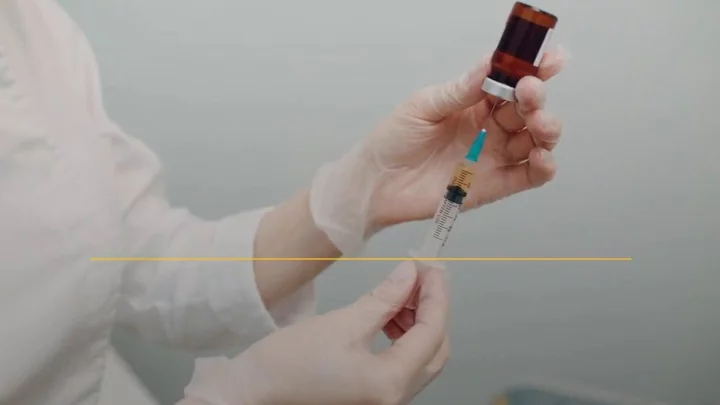
Scientists may have just found a cure for alcoholism
Alcohol addiction ruins millions of lives every year, but scientists may have found a cure for this terrible affliction. A new treatment for alcohol use disorder (AUD) has been trialled in monkeys with impressive results and, if these translate to human trials, the impact could be monumental. A team of neuroscientists and physiologists from across the US tested a new type of gene therapy to see if they could directly target the underlying brain circuitry associated with sustained heavy drinking. As they noted, in the journal Nature Medicine, people suffering from AUD commonly return to alcohol use even if they attempt to quit. This is largely to do with what’s known as mesolimbic dopamine (DA) signalling – meaning how the central nervous system circuit communicates the feelgood neurotransmitter dopamine. A protein called glial-derived neurotrophic factor (GDNF) is key to keeping these neurons in this reward circuitry functioning. However, experts have found that levels of GDNF are reduced in people with AUD during periods of alcohol abstinence, most notably in a region of the brain called the ventral tegmental area (VTA), as IFLScience notes. Therefore, the researchers decided to test whether using gene therapy to deliver more GDNF to the VTA could help reinforce this crucial dopaminergic signalling and prevent patients from suffering an alcoholic relapse. The team of scientists explained how alcohol consumption in non-addicts prompts the release of dopamine, creating a pleasurable buzz feeling, but chronic alcohol use causes the brain to adapt and stop releasing so much dopamine. “So when people are addicted to alcohol, they don’t really feel more pleasure in drinking,” Dr Kathleen Grant, a senior co-author of the study, said in a statement. “It seems that they’re drinking more because they feel a need to maintain an intoxicated state.” For their research, Dr Grant and her colleagues used eight rhesus macaque monkeys, who were exposed to increasing concentrations of alcohol over four 30-day “induction” periods. The monkeys then had free access to alcohol and water for 21 hours a day for six months, during which they developed heavy drinking behaviours. This was then followed by a 12-week abstinence phase, with the GDNF treatment performed four weeks in for half of the subjects. The gene therapy was delivered using a a viral vector containing a copy of the human GDNF gene injected directly into the primate’s VTA, according to IFLScience. And the results were truly jaw-dropping. “Drinking went down to almost zero,” Dr Grant said. “For months on end, these animals would choose to drink water and just avoid drinking alcohol altogether. They decreased their drinking to the point that it was so low we didn’t record a blood-alcohol level.” The most exciting aspect of their findings is the suggestion that gene therapy could offer a permanent solution for people with the most severe cases of AUD. This will be a welcome glimmer of hope to many, given that some 29.5 million people were diagnosed with AUD in the US alone in 2021, according to the National Institute on Alcohol Abuse and Alcoholism. Of these 29.5 million sufferers, almost a million (894,000) were aged between 12 and 17. It’ll likely be some time before we know for sure whether the gene therapy can be rolled out in humans, but it’s an important first step in tackling this devastating disorder. Sign up for our free Indy100 weekly newsletter Have your say in our news democracy. Click the upvote icon at the top of the page to help raise this article through the indy100 rankings.
2023-08-31 19:50

China's answer to Boeing and Airbus, the C919, takes first commercial flight
China's first large homegrown passenger jet made its inaugural commercial flight on Sunday, flying from Shanghai to Beijing, Chinese state news agency Xinhua reported.
2023-05-28 13:17
You Might Like...

Cruise Through Summer With R29 Editors’ Favorite Free People Styles

Earth's core is wilder than you can imagine
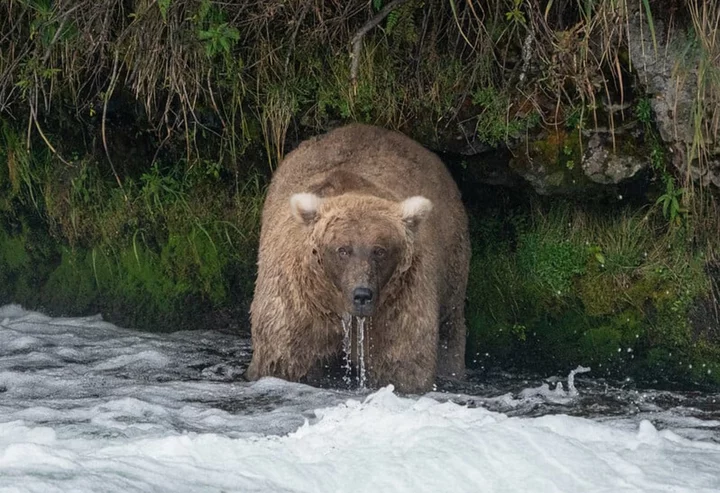
Fat Bear Week winner is revealed. She's a rebel.

Supreme Court ducks fight over foie gras, leaving California ban in place

United Natural Foods announces partnership with RELEX Solutions to enhance demand planning capabilities and procurement efficiencies

Yes, the viral sun bear is real. It's not a costume.

Waitrose Cuts Price of 200 Products Even as Inflation Persists

This Papier Deal Is For The Stationery-Obsessed