

Max Verstappen back to his best to claim pole position for sprint race
Max Verstappen bounced back from his mistake in qualifying for the United States Grand Prix to put his Red Bull on pole position for today’s sprint race. Verstappen will line up from only sixth place for Sunday’s main event at Austin’s Circuit of the Americas after his quickest lap was chalked off for exceeding track limits here on Friday night. But less than 24 hours later, the triple world champion atoned for his error to seal top spot ahead of Ferrari’s Charles Leclerc by 0.055 seconds for the 19-lap dash to the chequered flag later today. “The last lap was not great but we are still on pole so it shows the car is working well,” said Verstappen, with less than a tenth separating the top-three drivers. “It will be an exciting afternoon with cars close to each other so we don’t know what will happen in the sprint race. Normally in the race we are okay, but this track is demanding.” Lewis Hamilton finished third, seven hundredths behind Verstappen, with Lando Norris and Oscar Piastri fourth and fifth respectively for McLaren. George Russell qualified eighth. It was not all plain-sailing for Verstappen after he spun on the exit of Turn 9 in Q2. Verstappen took too much kerb on the entry to the left hander which sent him onto the grass and into a pirouette. But after he completed a 360-degree spin, Verstappen was able to make it back to his garage and into Q3. Hamilton also survived a hairy moment in the opening phase of qualifying when he nudged the back of Yuki Tsunoda’s AlphaTauri. “Check my front wing,” said Hamilton on the radio. “One of the drivers blocked me and we touched.” Hamilton was able to continue and although the stewards noted the incident, no further action was taken. Daniel Ricciardo, absent from the last five races with a broken hand, out-qualified Tsunoda to progress to Q2 and finish 11th. Tsunoda starts 19th, one place ahead of Logan Sargeant who propped up the order for the second day in a row at his home event. The sprint gets under way at 5pm local time (11pm BST). Read More I can do something wiser with my time – George Russell stops using social media Charles Leclerc snatches pole position after Max Verstappen’s lap was deleted Daniel Ricciardo ready for AlphaTauri return at United States Grand Prix On this day in 2009: Jenson Button crowned Formula One world champion in Brazil FIA to review Qatar GP as ‘dangerous’ temperatures prompt driver complaints Lewis Hamilton and George Russell vent anger on radio after collision in Qatar
2023-10-22 02:58

Anne Hathaway 'thrilled' to work with Shiseido
Anne Hathaway has revealed that she's looking forward to working with Shiseido.
2023-08-31 22:25

How to react kindly to people with Tourette’s – and what not to say
Although most people have heard of Tourette’s Syndrome, they often wrongly think it’s a rare condition that always involves involuntary swearing. But the reality of Tourette’s Syndrome (TS) is that it’s a complex, inherited neurological condition which only features involuntary swearing (coprolalia) in 10-20% of cases, and isn’t as rare as you might think – more than 300,000 children and adults live with it in the UK, according to the charity Tourettes Action. And a number of celebrities have opened up about their Tourette’s, including Lewis Capaldi, whose shoulder twitches because of the condition, and Billie Eilish, who has said she experiences tics like clicking her jaw and tensing her arm muscles. On Tourette’s Awareness Day (June 7), which takes place during Tourette’s Awareness Month (May 15-June 15), Tourettes Action wants to raise awareness that rather than involuntary swearing, the key features of TS are tics. These are involuntary and uncontrollable sounds and movements which can range from limb and head jerking, whistling, grinding teeth and clenching the jaw, to legs freezing, or involuntary jumping. Many people with the condition will also have co-occurring features and conditions such as attention deficit hyperactivity disorder (ADHD), obsessive compulsive disorder (OCD), and anxiety. Also many experience pain because of their tics, often caused by repetitive involuntary actions such as hitting themselves, chewing the inside of their mouth, etc. During the awareness day and month, Tourettes Action is running the #ItsWhatMakesMeTic campaign in a bid to destigmatise Tourette’s by educating people and showing them the reality of living with the condition. “Research tells us that many people will experience discrimination because of their Tourette’s, and 75% of people will actively conceal their condition for fear of discrimination and people’s reactions towards them,” says Emma McNally, CEO of Tourettes Action. “People with Tourette’s often feel isolated and excluded because the level of awareness in society is so low.” One of the many things that can make life difficult for people with TS is the way others react to their tics, and McNally explains: “We also hear many people don’t know what they should say or how they should act towards someone with Tourette’s. It’s our goal to change that. We want to use Tourette’s Awareness Month to help raise awareness of the condition, to stop the stigma and enable people who live with Tourette’s to be fully included in society.” Here, McNally outlines the best ways for people to react when someone with Tourette’s tics… 1. Remember what comes out of their mouth isn’t what they’re thinkingAlthough 80-90% of people with TS don’t have involuntary verbal tics that make them swear or say inappropriate things, McNally stresses that whatever someone with verbal tics says isn’t connected to what they’re thinking. “Verbal tics aren’t a reflection of someone’s thoughts or emotions, so don’t take offence,” she advises. 2. Don’t draw attention to the tics If you notice someone ticcing, it’s best to be patient and not draw attention to them, says McNally. “By pretending not to see or hear the tics, you allow them to feel more at ease in social situations,” she explains. 3. Don’t make assumptions Some tics, for example, can take the form of frequent sniffing or clearing of the throat, explains McNally, and she stresses: “So do not assume that the person has a cold and thrust a tissue in their hand.” 4. It’s OK to laugh – if they areMcNally says if the tics are funny and the person ticcing finds them funny, then it’s OK to laugh, but she stresses: “Laugh with them, not at them.” 5. Ask questionsWhen interacting with someone who has Tourette’s, instead of making assumptions, ask them questions, suggests McNally. “It shows you care and want to understand. Just be sure to ask politely and at the right time, when they aren’t overwhelmed or in distress.” 6. Be understanding when they’re strugglingMany people with Tourette’s often need to suppress their tics for a while, or in certain situations, explains McNally. “So if they disappear, or take themselves out of the situation, be understanding and provide some sort of acknowledgement that you can see they’re struggling – a kind smile should do it.” 7. Don’t stare Think about how the person with Tourette’s may feel about your reaction, and don’t stare at them. “If you can’t ignore someone ticcing, just smile at them kindly – but not in a pitying way – to reassure them they’re not bothering you,” suggests McNally. 8. Take their lead & don’t fussMcNally explains that if someone with Tourette’s is clearly distressed and having a tic attack, it’s likely they won’t be able to interact with strangers and just need to get to a secure, quiet spot where they can let the tics go without fear of judgement. “Even well-intended questions or offers of support can sometimes actually make them feel worse,” she says, “so the best thing to do is to ask calmly if you can help them and then let them tell you what you can do. Otherwise, don’t fuss, be patient and give them space and privacy.”9. Don’t take photos Again, think how the person with Tourette’s will feel, and don’t film or take pictures of them, warns McNally, who points out: “As with any situation, you need someone’s permission to photograph them”. 10. Set a good example for kids If you’re with children, make sure they aren’t pointing or laughing, advises McNally, who adds: “Set the right example and explain the condition to them later.” Read More Charity boss speaks out over ‘traumatic’ encounter with royal aide Ukraine war’s heaviest fight rages in east - follow live What to wear to Glastonbury this year Children’s attention span is ‘shorter than ever’ in the classroom, teachers say Nearly a third of primary schools have no male classroom teachers – study
2023-06-07 15:47

Meta sells GIPHY to Shutterstock for a big loss after regulators force a sale
How does one turn $400 million into a cool $50 million in just 3 short
2023-05-23 22:52

Get a brand-new Lenovo IdeaPad for just $210
TL;DR: As of August 24, you can get the Lenovo IdeaPad 11.6" HD Intel N4020
2023-08-24 17:54

Snag a pair of Beats Studio3 headphones for just $169 right now
SAVE 48%: As of June 20, the Beats Studio3 headphones are on sale at Walmart
2023-06-21 01:22

I’m A Reformed Other Woman — Here’s What Changed
Content warning: This article discusses sexual assault in a way that may be distressing to some readers.
2023-07-25 00:46

American influencers in London think fish and chips is mackerel and crisps
Brits are losing their minds over a TikTok showing two American influencers trying out "London snacks" – with one very unique choice. In a viral clip that's racked up over half a million views, couple Dani and TBell (@tanddtv) showcase the range of snacks including Walkers crisps, Starburst, a vegan KitKat, Skittles – and tinned mackerel. "Not looking forward to this," Dani tells viewers while holding up the tinned fish. "Oh my god, that looks appetising to you?" she says as they peel back the lid. "Yeah, it looks protein-packed," her partner TBell responds before giving it the taste test. TBell appears to thoroughly enjoy the "interesting" choice by rounding off with a cheese and onion crisp for good measure. "This is what you call fish and chips," he jokes while enjoying the mackerel and crisp combination. Meanwhile, Dani wasn't so much a fan and looked repulsed. "I don't like it," she says. "I'm going to be sick." It didn't take long for British viewers to spam the TikTok with comments, with one saying: "Calling mackerel and crisps fish and chips is just offensive" "Nobody in London eats mackerel for a snack," another highlighted, while a third reiterated: "This is not what we mean by fish and chips." @tanddtv this one was interesting?? #couplesthings #couplestravel #london #love #snacks #couplesmukbang #relationshipgoals The comments continued to roll in, with confusion around the fishy snack. "I don’t think any one in England eats tinned mackerel," one TikToker wrote. "Ya’ll really said let’s try fish and chips and bought canned mackerel and chips," another joked. Sign up for our free Indy100 weekly newsletter Have your say in our news democracy. Click the upvote icon at the top of the page to help raise this article through the indy100 rankings.
2023-08-19 20:17

Discount Retailers’ Sales Rebound With Anxious Shoppers Seeking Deals
Value retailers are holding up against a broader spending pullback as persistent anxiety over the economy and a
2023-11-14 22:21

5 things everyone needs to know about eczema
It’s easy to dismiss eczema as just itchy dry skin. But as millions of people know, the effects of eczema go way beyond this. “Eczema is so much more than ‘just an itch’,” says Andrew Proctor, chief executive of the National Eczema Society. “Affecting over eight million people in the UK, this incurable, highly visible skin condition has a huge impact on every aspect of a person’s life, extending far beyond the physical symptoms of itchy, inflamed, sore, cracked and bleeding skin. “Living with eczema means constantly having to plan and prepare, as every decision you make will potentially affect your skin. It shapes your home environment, education, career, social life, hobbies, holidays and relationships, and as a result, patients often report feeling anxious, depressed, self-conscious, isolated and helpless.” This National Eczema Week (September 9-16), here’s what Proctor wants everyone to know… 1. It doesn’t just affect children Atopic eczema affects one in five children and one in 10 adults in the UK. Proctor says: “While eczema is often viewed as a childhood condition, it affects people of all ages. Some develop eczema as babies, others in childhood, but thankfully it can improve over time.” Some people will have eczema all their life however, and some only develop it in their later years. “The important thing is to seek medical advice as soon as possible to get control of the eczema and develop an effective skincare routine,” advises Proctor. 2. It’s not contagious Proctor says that sadly, many people still think you can catch eczema. “However, atopic eczema isn’t contagious,” he stresses – pointing out it’s a complex condition involving genes, the immune system, the environment and our skin barrier. “This means skin becomes very dry and doesn’t provide sufficient protection from irritants, allergens and infection.” To tackle this, a foundation of eczema care is to apply medical moisturisers (emollients) to trap water in the skin and help reinforce the skin barrier. “Finding the emollient that suits your skin best can involve a lot of trial and error, but it’s critical to managing eczema,” says Proctor. 3. Environment plays a huge role Environmental factors can trigger eczema flare-ups or make it worse. Common culprits include stress, being too hot/cold or experiencing a sudden change in temperature, soap, shampoo and bubble bath, laundry detergent and cleaning products, perfume, pollens and moulds, pet fur, wool and synthetic fabric, and house dust mites. “Everyone will have certain things that trigger their eczema, and these vary between people,” Proctor explains. “Try keeping a diary to help identify triggers and patterns, so you can remove likely suspects and see if it helps. Triggers can also change over time and it’s worth continuing with the diary even if you think you’ve identified yours.” 4. It’s hard not to scratch Proctor explains: “One of the most maddening things you can say to someone with eczema is ‘stop scratching’. It’s not that simple! The unbearable, relentless itch is one of the defining features of the condition, and patients refer to it as torture. “You know you shouldn’t scratch, as it damages the skin and can cause infections, but the relief it provides is irresistible.” To help manage the itch, Proctor suggests finding a positive distraction or asking others to help you take your mind off it. You could also try substituting another action for scratching – press a nail on the itchy patch or tap the skin gently with your forefinger; keep your hands occupied with a ball, toy or other object; or wrap a bag of frozen peas in a towel and apply it to the itchiest area. 5. It’s a mental as well as physical battle Living with eczema is mentally exhausting too. “It can be a rollercoaster of emotions, from excitement when you start a new treatment, to despair when it doesn’t work or you experience a bad flare-up,” says Proctor. “There can be huge frustration too, when you do everything you’ve been asked and the eczema still refuses to give you any respite.” If this happens, as well as asking your GP or dermatologist for a review, it’s important to reach out to family and friends for support: “People who are able to open up about how their eczema truly affects them can feel a huge weight has been lifted.” Other ways to help cope include good nutrition and hydration, regular exercise, rest and relaxation. “Journaling, meditation and mindfulness can help you focus on the good things in your life and counterbalance negative feelings about eczema,” adds Proctor. “When so much time and effort goes into managing your eczema, it’s easy to forget there’s more to you than just your skin. Think about what you want to accomplish and formulate a plan. It’s about living successfully alongside eczema, not having your life defined by it.” For more information, visit eczema.org. The NES’ new video – More Than ‘Just An Itch’ – goes live on September 9 to mark National Eczema Week. Read More How many times a week you need to workout to get fit Shaquille O’Neal says he lost 55 pounds after being unable to climb stairs How did man who dodged theme parks due to his weight lose nearly 60kg? What your dog’s ear movements say about their health, according to a vet Terminally ill mum prepares for worst after numb hand turns out to be deadly disease Man who went to Turkey to make himself taller says pain was ‘worth it’
2023-09-08 18:16

Disney Snags Rock & Roll Hall of Fame Ceremony From HBO
Disney+ has become the new broadcast home for the Rock & Roll Hall of Fame show. The 38th
2023-09-28 20:51

Pepsi made its first-ever condiment
Typically, Pepsi is best with a hot dog... not on a hot dog. But maybe that's changing.
2023-06-27 21:18
You Might Like...

Apple Watch Series 10 rumors: What we know so far

Lisa Vanderpump to Open First Lake Tahoe Venue, “Wolf by Vanderpump” at Harveys Lake Tahoe
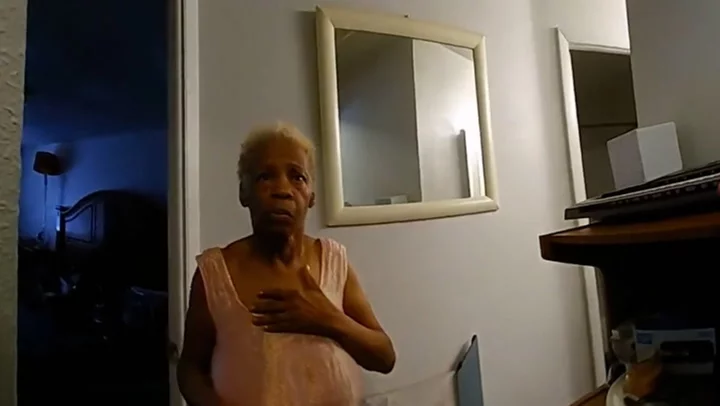
Colorado police buy woman groceries after her partner made young children ‘watch him eat’ and go hungry

Ukraine war: Drones target Odesa grain stores near Romania border

Virgin Galactic notches fourth spaceflight in four months

Get Windows 10 Pro for 84% off, now just $30

Emilia Romagna Grand Prix in doubt due to persistent rain in northern Italy

Alfa Romeo confirm driver line-up for 2024 F1 season