

Pet parents assemble: Treats, toys, and more are on sale this Labor Day
Our top picks: Best deal on dog treats Greenies Dental Treats (Original) $34.99 at Walmart
2023-09-05 16:58

'Kokomo City' trailer is a groundbreaking portrait of Black trans sex workers
"This is survival work. This is risky shit." In Kokomo City, Black trans sex workers
2023-06-15 18:15

'A Haunting in Venice' trailer throws Hercule Poirot into a ghost story
If you've ever read an Agatha Christie mystery (or watched Jonathan Creek or Scooby Doo),
2023-07-19 22:50

At least 1 person was treated for 'heat-related discomfort' in a plane at a Las Vegas airport
First responders treated at least one person for "heat-related discomfort" in a Delta Airlines flight that experienced "uncomfortable temperatures inside the cabin" at Las Vegas' Harry Reid International Airport Monday, the airline said.
2023-07-19 09:24

AT&T to shut flagship store in downtown San Francisco
U.S. wireless carrier AT&T said on Friday it would close its flagship store in downtown San Francisco, deepening
2023-06-17 04:16

Intel's New Arc Pro A60 Graphics Card Is for CAD Not Call of Duty
Intel is set to offer workstation users a powerful new graphics card in the form
2023-06-07 23:45
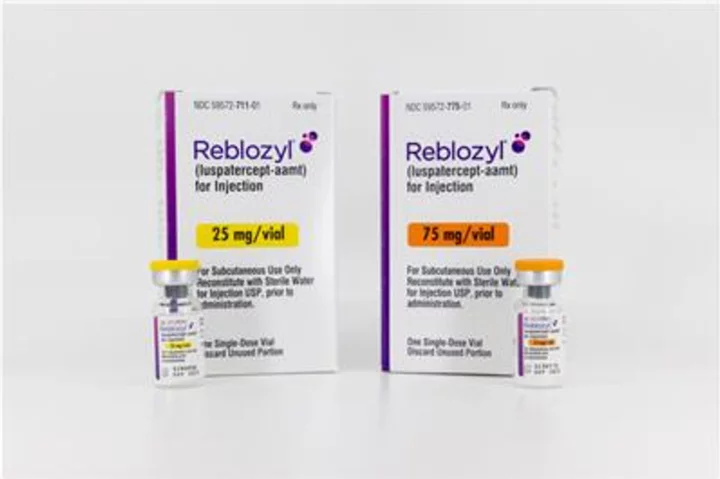
U.S. FDA Approves Bristol Myers Squibb’s Reblozyl® (luspatercept-aamt) as First-Line Treatment of Anemia in Adults with Lower-Risk Myelodysplastic Syndromes (MDS) Who May Require Transfusions
PRINCETON, N.J.--(BUSINESS WIRE)--Aug 28, 2023--
2023-08-29 10:21

The Indignity Of Follow-Up Emails
It’s 3.12 p.m. on a Thursday and your fingers are itching at your keyboard. Your colleague told you EXPLICITLY that you’d hear back about this external funding application on Thursday afternoon two weeks earlier, with plenty of time before the deadline. You talked about it in the office last week! You check the email from them again, just in case. Nothing new, just an old reminder of their proposed deadline. You click refresh. Go stand in the kitchen for a couple of minutes. Click refresh again. And again. Crickets.
2023-09-15 01:19

'The Burning Girls' trailer teases a small village with a terrible past
Sinister secrets abound in the trailer for new chiller series The Burning Girls, based on
2023-09-15 18:52

Dish Wireless: We’ll Meet June Deadline to Cover 70% of Americans With 5G
Dish remains on course to build the US’s first new nationwide wireless network in decades
2023-05-20 06:26

Scientists make surprising discovery that could help boost the global population
Infertility is a problem that afflicts more than a billion people across the world, which is why treatments such as IVF are so important. The procedure (in vitro fertilisation, to use it’s full name) involves the extraction of an egg from the woman's ovaries to be fertilised with sperm in a laboratory and returned to the woman’s womb. The goal is that the resulting embryo will then grow and develop into a foetus, blessing the parent or parents with a baby. However, success rates for IVF – as in, the percentage of treatments that result in a live birth – remain somewhat unencouraging: 32 per cent for women aged under 35; 25 per cent for women aged 35 to 37, with the numbers continuing to drop the older you get, according to the NHS. Nevertheless, a major new study has revealed a striking new finding which could help boost the hopes of countless aspiring mums and dads across the world. Sign up for our free Indy100 weekly newsletter After analysing 3,657 frozen embryos over a period of eight years, researchers in Western Australia found that IVF was much more likely to work when eggs had been harvested in the summer. The team clarified that it didn’t seem to matter when the embryos were transferred to the mother’s womb, just when the eggs were collected. Indeed, the likelihood of babies being born when the eggs had been retrieved in the summer was 30 per cent higher than when they had been retrieved in the autumn, according to the scientists. The team also found that the temperature on the day of egg collection didn’t seem to have an impact on success rates, but the number of sunny hours did. Of the embryos they tested, those harvested on days that had the most sunshine were 28 per cent more likely to result in a live birth compared to the darkest and most overcast days. “Our study suggests that the best conditions for live births appear to be associated with summer and increased sunshine hours on the day of egg retrieval,” the study’s lead, Dr Sebastian Leathersich, of Perth’s King Edward Memorial Hospital, said about the paper, which was published in the journal Human Reproduction. Still, he noted: “There are many factors that influence fertility treatment success, age being among the most important. “However, this study adds further weight to the importance of environmental factors and their influence on egg quality and embryonic development." He further explained: “We effectively separated the conditions at the time of egg collection from the conditions at the time of transfer, demonstrating that environmental factors when the eggs are developing are as, if not more, important than environmental factors during implantation and early pregnancy.” The expert obstetrician and gynaecologist added: “Optimising factors such as avoiding smoking, alcohol and other toxins and maintaining healthy activity levels and weight should be paramount. However, clinicians and patients could also consider external factors such as environmental conditions.” Despite Dr Leathersich and his colleagues concluding that the temperature on the day of egg collection had little bearing on the success of the process, they also found that the temperature on the day of embryo implantation did make a difference. The chances of a live birth rate decreased by 18 per cent when the embryos were transferred on the hottest days (when average temperatures measured between 14.5C and 27.8C) compared to the coolest days (0.1C to 9.8C), and there was a small increase in miscarriage rates, from 5.5 per cent to 7.6. The finding that miscarriage rates were highest when embryo transfer took place on the hottest days is consistent with other studies showing higher rates of miscarriage in the summer months. “This suggests that the negative effects of high temperature are more likely related to early pregnancy rather than egg development,” Dr Leathersich concluded. When it comes to the disparity in success rates between eggs retrieved in summer and autumn, he and his team pointed out that melatonin levels could be at play. Differences in lifestyles between the winter and summer months may also play a role, he and his colleagues acknowledged. "It is possible that there are differences in activity, diet, and lifestyle in different seasons which could underlie the observed differences in live birth rates, though such data were not collected in this study," they wrote. "It is also possible that other environmental factors, including pollutants, may impact clinical outcomes." Whilst the study’s findings are compelling, Dr Leathersich and his team admitted that it did have its limitations. The research was done in hindsight, using eggs that had been frozen, then thawed, so it could not draw watertight conclusions. “Ideally, these findings should be replicated in other sites with different conditions and different treatment protocols to confirm the findings,” Dr Leathersich said. “It would also be interesting to look at the impact of season and environmental factors on sperm parameters, as this could have contributed to our observations.” He added: “We are now planning to analyse this same group of patients using air quality data, as there may be seasonal changes in exposure to harmful pollutants which could negatively affect reproductive outcomes. “Finally, given the huge increase in so-called 'social egg freezing' for fertility preservation and the fact that this group generally have flexibility about when they choose to undergo treatment, it would be very interesting to see if these observations hold true with frozen eggs that are thawed and fertilised years later. “Any improved outcomes in this group could have big impacts for women making decisions about their future fertility, but the long-term follow-up required means it is likely to be some time before we can draw any conclusions for this population.” Have your say in our news democracy. Click the upvote icon at the top of the page to help raise this article through the indy100 rankings.
2023-07-10 23:22

'I just received a facial look before any big event...' Kim Kardashian shares travel beauty tip
Reality TV star Kim Kardashian admits "it's definitely nice to have a moment of self-care" each day but she can only spare 10 minutes for her skincare regime.
2023-10-13 19:53
You Might Like...

Google AI-powered search gets better at citing its sources

Singapore Sees Travel Boom Shielding Economy From Recession

Princess Margaret of Denmark's Historic French Fortress Is Going To Auction

3 Ways To Wear Shirt Dresses That Are Anything But Traditional

Ford Swings at Supercars With New $300,000 Mustang GTD

Scottish govt proposes to make drug possession legal

Adidas Eyes More Yeezy Sales Next Year With Big Stockpile Left

For travelers who want to avoid babies and kids, one airline will test an adults-only section