

Elon Musk reveals names of his twins with Shivon Zilis
Elon Musk has revealed the names of the twin children he shares with Shivon Zilis. In an excerpt of Musk’s upcoming biography, published by Time Magazine, author Walter Isaacson wrote that the Tesla CEO, 52, and the Neuralink executive, 37, named their 16-month-old twins, Strider and Azure. On X, formerly known as Twitter, the author also shared the first photo of the family together, with Strider seen pictured sitting on his mother’s lap while Azure was perched on her father’s. Musk and Zilis reportedly welcomed twins Strider and Azure in November 2021, but the news didn’t make headlines until July of the following year. According to Isaacson, although Zilis has been Musk’s “intellectual companion on artificial intelligence since the founding of OpenAI eight years earlier” and shares children with the X owner, the duo are not in a romantic relationship. Reuters reported that Zilis had allegedly confided in colleagues that the twins were conceived via in-vitro fertilisation. Earlier in 2021, Musk also welcomed a baby girl named Exa Dark Sideræl, who goes by Y, with ex-girlfriend Grimes. The couple secretly welcomed the child via surrogate. The “Oblivion” artist and Musk also share a three-year-old son, X AE A-XII, whom they welcomed in May 2020. X’s initial name, X AE A-12, did not follow California guidelines so the couple was forced to comply and made the change. According to Page Six, after three years together, the pair reportedly “semi-separated” in September 2021 before Exa’s arrival. In addition to the children he shares with Zilis and Grimes, Musk also fathered 19-year-old twins Vivian Jenna Wilson and Griffin, along with triplets Kai, Damian, and Sax, with his first wife, Justine Wilson. The triplets were born in 2006, while the twins were born in 2004. According to court documents obtained by TMZ, Vivian, who is transgender, publicly disavowed her father in a petition that asked for a new birth certificate to be issued by the state. In the documents, she wrote that the reason behind her name change was not only her new “gender identity” but also because of “the fact that [she] no longer lives with or wish to be related to [her] biological father [Elon] in any way, shape or form”. According to Musk’s biographer, the tech entrepreneur “was generally sanguine” about his daughter’s transition, but political ideology is what ultimately divided them. "I’ve made many overtures," Musk told Isaacson about his alleged atempts to mend his relationship with his daughter. "But she doesn’t want to spend time with me." Read More First photo emerges of Elon Musk and his baby twins with Neuralink director Elon Musk thwarted Ukrainian drone attack on Russian ships, book claims
2023-09-08 04:25

How to watch the Women's Super League online for free
The Women's Super League is back for the 2023-24 season, and we can't wait to
2023-09-30 12:59

Ferragamo's CFO Alessandro Corsi resigns
MILAN Italian luxury group Salvatore Ferragamo said on Friday that its Chief Financial Officer Alessandro Corsi would resign
2023-07-01 00:53

'Isn’t Caroline Manzo doing this already?': Teresa Giudice trolled for launching YouTube cooking channel
Posting a heart emoji, Teresa Giudice wrote, 'It’s FINALLY live my first recipe is up on my new YouTube channel NOW!'
2023-05-25 09:27

Prime members: Save $5 on your next GrubHub order with this early Prime Big Deal Days offer
GET $5 OFF: As of September 20, spend $25 on a Grubhub order and get
2023-09-21 01:46

Max introduces Bleacher Report add-on for free sports streaming through February
FREE BLEACHER REPORT ADD-ON: Starting Oct. 5, Max subscribers can access the new Bleacher Report
2023-09-28 00:17
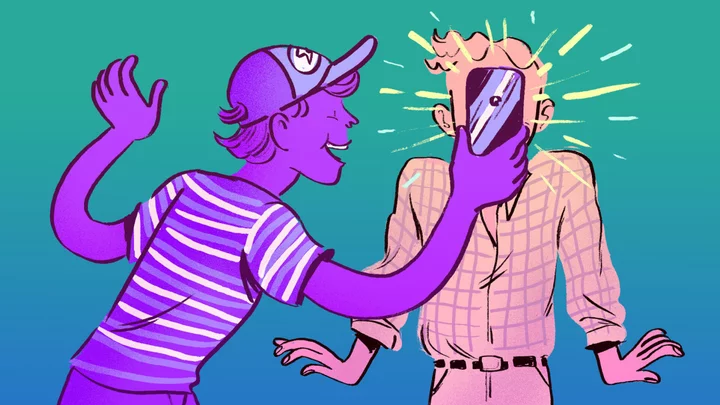
How to Record the Screen on Your Android Phone
If you need to record the screen on your computer, Windows has the Game Bar
2023-09-05 22:48

At 29, I Finally Opened Up To My Immigrant Mom About Dating
I was 29 when I got the sex talk for the first time. My mom sat at one end of the couch looking at her phone while I sat in the opposite corner scrolling through mine, a shared blanket between us. Suddenly she interrogated me, glasses perched at the tip of her nose. “Is Anil* coming to Saugatuck with you?”
2023-05-13 00:17

Oma Fertility Opens Three State-of-the-Art Clinics, Expanding Access to its Science-Forward Fertility Treatments
SAN JOSE, Calif.--(BUSINESS WIRE)--May 31, 2023--
2023-05-31 21:27
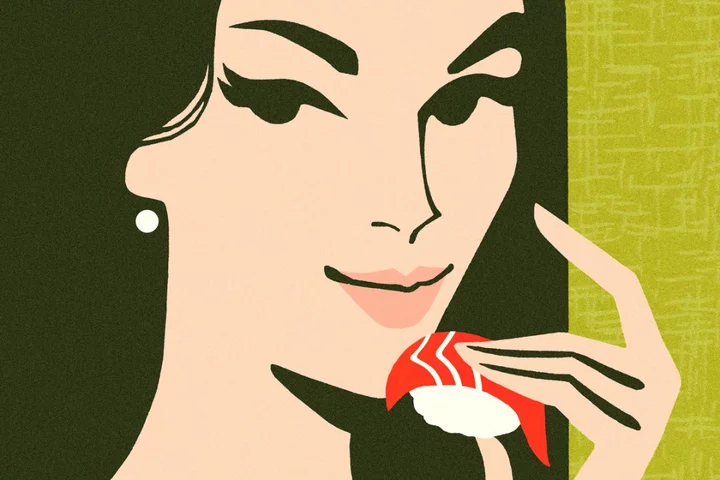
I feel it in my fingers: Why more of us should start eating with our hands
The next time you eat something with your hands, take a moment to notice how it feels on your fingertips before taking a bite. If it’s a burger, are the buns smooth or covered in a smattering of sesame seeds? When you put pressure on them with your fingers, does the bread squish down or is it more of a crumby affair? Then, when you finally take a bite, notice how satisfying it is to sink your teeth through its layers; soft bun giving way to crunchy lettuce or onion, to oozy cheese to, finally, juicy patty. Now think about how different it would be if you had used a knife and fork. Eating with one’s hands is an immensely pleasurable experience. While in the West, the act is usually confined to foods encased in bread or pastry, Indian, African and some other Asian cultures are more adept at using their fingers for dishes that might seem too “messy” or “sticky” on this side of the world. One of my favourite dishes is banana leaf rice, which at its core comprises of rice, vegetables and curry. I mix each element of the dish and use a pinching motion with all five fingers to construct the perfect bite, before sweeping it up in a quick motion and delivering the food to my mouth. I find that it forces me to really consider each bite, from what flavours and textures I want it to contain, to how large a portion I can manage. Up until a few months ago, I never really thought about how often I eat with my hands. Like many people, I associated it closely with Indian meals and always thought that Western culture was too obsessed with polite society to really dig their fingers in. This is still true, to an extent – many South Asians who grew up eating with their hands report being looked at with horror when they attempted to do the same in public here. But, after witnessing my very white British husband happily dig into banana leaf rice when we began dating, and having conversations with friends about the topic, I’ve come to realise that eating with our hands is a much more universal act than I thought. For example, burgers, pizzas, hot dogs and chips are all eaten by hand – unless you’re eating one of those beastly burgers that tower too high and need to be deconstructed. Then there’s things like fried chicken or shellfish, which are simply easier to pick up, pull apart and pry open using your fingers. Foods like Mexican burritos and tacos or Japanese sushi are commonly picked up by hand and devoured. Some people enjoy eating salads by hand, finding it easier to use pieces of lettuce filled with dressing and other ingredients like edible spoons. A surprising proponent of this was Sylvia Plath, who wrote in the third chapter of her 1963 novel The Bell Jar that she observed a poet eating a salad “with his fingers, leaf by leaf”, making it “seem to be the only natural and sensible thing to do”. The more I think about it, the more I realise that my hands are my favourite utensil. No one is delicately picking up crisps with chopsticks or forking a French fry. All manner of flat breads – from parathas and naans to injeras – beg to be torn apart by hands and used to mop up dhal and curry. I would never think of eating a sandwich with a fork and knife, any more than I would for a Taiwanese bao. It just seems wrong. On this side of the world, cutlery has reigned supreme until very recently. Primitive humans have been carving knife and spoon-like implements for centuries, while the fork is a surprisingly modern invention. According to the Smithsonian Magazine, a Byzantine princess debuted a golden fork at her wedding feast in Venice 1006, which disgusted locals who ate using their fingers and knives. One Venetian apparently condemned such a tool and said: “God in his wisdom has provided man with natural forks – his fingers. Therefore it is an insult to him to substitute artificial metal forks for them when eating.” There’s perhaps also an aspect of self-consciousness being thrown out the window when we eat with our hands. It banishes the concept of formality and Anglocentric ‘table manners’ Surekha Ragavan Despite the initial rejection, forks became a mainstay across Europe after 1533 when Catherine De Medici, wife of Henry II, hauled a collection of silver forks from Italy to France in 1533. Three hundred years later, the full set of silverware as we know it had integrated itself into everyday life in Europe. Manners-obsessed Victorians then made up all sorts of etiquette rules, from how to hold a fork, to the myriad of different-sized cutleries with very specific purposes – like fish knives and dessert spoons. These became class markers, separating the upper echelons of society with their dinky utensils from the lower classes, who worked too much to care about which spoon went where. But one thing could be agreed upon – eating with one’s hands was considered impolite and vulgar in almost all culinary situations. That is, until about a decade ago when DeBrett’s, the British authority on etiquette and behaviour, declared in their 2012 guide that “table manners are no longer about adhering to a rigid, and outdated, code of conduct”. The experts named foods like pizza and calzone as “acceptable” foods to be eaten using your hands. It also advised such adventurous eaters to create “as little mess as possible”, sit up straight and ensure you “never put your elbows on the table”, proving that some old habits die hard. Bristol-based restaurateur Rashintha Rodrigo, one of the five founders of Sri Lankan restaurant group The Coconut Tree, says he eats almost anything with his hands – even a roast dinner. “I start with a fork and knife but always find myself picking pieces of chicken or potato off my plate with my fingers towards the end of the meal,” he laughs. He also grew up eating rice and curry with his hands in Sri Lanka, and felt self-conscious about doing the same when he moved to Britain. But these days, he finds it liberating. “It’s become more accepted in the past five or six years and more people are curious about it,” Rodrigo says. Surekha Ragavan, founder of Periuk, a digital archive of heritage Malaysian recipes, also finds freedom in the act. “There’s perhaps also an aspect of self-consciousness being thrown out the window when we eat with our hands. It banishes the concept of formality and Anglocentric ‘table manners’,” she says, reminding me of another observation by Plath in The Bell Jar. The author’s liberation is slightly different, though, as she wrote: “I’d discovered, after a lot of extreme apprehension about what spoons to use, that if you do something incorrect at a table with a certain arrogance… nobody will think you are bad-mannered or poorly brought up. They will think you are original and very witty.” Those who advocate eating with hands often also say it makes the food taste better, but no one seems to be able to pinpoint why. Jose Pizzaro, the acclaimed Spanish owner and founder of the Pizarro group of restaurants, describes it as “the best way to eat”. “It’s a visceral pleasure that’s really hard to beat,” he says. “It creates a sort of magical connection between you and the food. If you’ve never eaten a big, fat, juicy prawn covered with garlic and lemon with your hands, and then go through the ritual of pulling off the legs and the shell and then sucking the brains out – you haven’t lived!” But why is the tactile sensation of touching food so delightful? Some opine that touching your food is beneficial because you can gauge food temperature better with your fingers, and so run a lower risk of burning your tongue. Others claim that your fingers have “healthy bacteria” on them that get transferred into your digestive system when you eat with your hands, but these are difficult to quantify. However, Charles Spence, professor of experimental psychology at the University of Oxford, believes the pleasure lies in our perception of food, as opposed to any other physical benefits. In his review of how the experience of eating changes when people eat with their hands instead of cutlery, Spence found that having more direct, tactile contact with food appears to “enhance the experience” of eating and drinking. “There’s a lot of sensory input that happens even before we put the food in our mouth,” he says. “Just by using our sensitive finger pads, we almost anticipate how tasty something is going to be before it reaches our tongue.” There’s practicality in using our hands to eat, too. We can determine how ripe a fruit is by squeezing it gently, or figure out if something is going to be soft or crunchy before biting into it. Of course, there are some dishes that are simply not hand-friendly. Noodles, pasta and soups obviously require cutlery to eat, but there’s nothing to stop us from taking more joy in the foods we can eat with our hands. If you’ve never tried handling anything beyond a sandwich or a pasty, I fully encourage you to try something new. Take a leaf out of Plath’s book with your next salad, perhaps, or take the plunge into some rice and curry. It will require practice to develop the skill of eating without dropping rice absolutely everywhere, but I promise you, it’s worth it. Read More Adorable, cuddly… evil? How the Furby took over the world ‘You think it’s going to be a money making machine’: How modern life killed the hobby The dish that defines me: Mallini Kannan’s baked honey-soy salmon 30-minute summer recipes for all the family to enjoy What to cook this week: Tomato tart, sweetcorn pasta and other summery suppers The dish that defines me: Mallini Kannan’s baked honey-soy salmon
2023-08-26 13:53

Mystery in Dubai as mega-wheel stops turning
Two years ago, Dubai's skyscraper-studded skyline welcomed a Ferris wheel touted as the world's largest, but it mysteriously stopped turning...
2023-08-07 10:47

France Sends Top Diplomat to China as EV-Probe Backlash Heats Up
France’s top diplomat will head to China this week to smooth relations after a European anti-subsidy probe championed
2023-11-21 02:22
You Might Like...

What’s Trending Today: Apple WWDC Event, Hollywood Deal, Unruly Delta Air Passenger, Zhang Wins LPGA
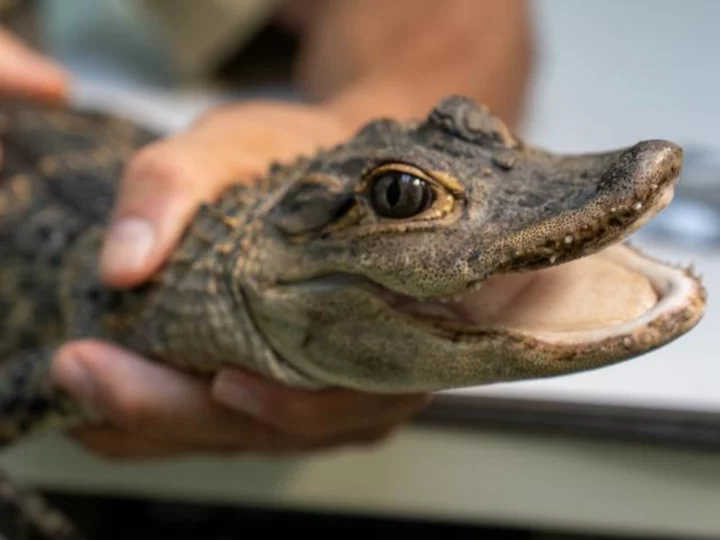
Landscapers in Pennsylvania find malnourished alligator named Fluffy in a creek, officials say
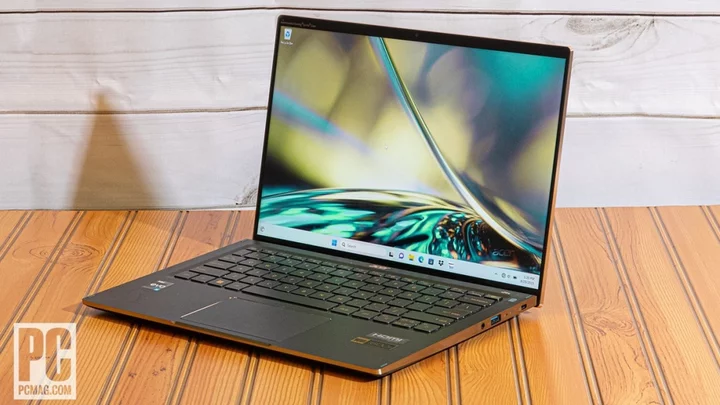
Acer Swift 14 (2023) Review
'Quordle' today: Here are the answers and hints for July 28

The make-or-break AI tech Google may be rolling out at I/O 2023

Cierto Tequila Wins Best Extra Añejo and Two Double Golds at the Los Angeles Invitational Spirits Challenge

‘It was pretty wild’: F1 champion Max Verstappen learns how to drift

Under your skin: Tattoo artist inks cremated remains in art